The best stability balls for core training can add balance, instability, and controlled movement to home workouts, Pilates sessions, rehabilitation routines, and desk-based activity. The right choice depends on your height, available space, training style, and preferred level of support.
We’ve gathered full-size exercise balls, half balance trainers, and compact Pilates balls to help you match the equipment to your goals without overbuying.
Best 10 Stability Balls for Core Training Picks for 2026
Versatile Grip Pick

- Textured anti-slip surface
- 330-pound capacity
- Five sizes with pump included
Best For: Versatile core, yoga, Pilates, and active-sitting routines
Connected Training Pick

- Durable anti-slip vinyl
- 55 cm and 65 cm options
- Includes TRX app workout access
Best For: Portable training with guided TRX programming
High-Capacity Choice

- 660-pound anti-burst capacity
- Five sizes from 45 to 85 cm
- Pump and two air plugs included
Best For: High-capacity core, balance, stretching, and active sitting
Two-Sided Balance Pick
Lifepro Horizon Half Balance Ball
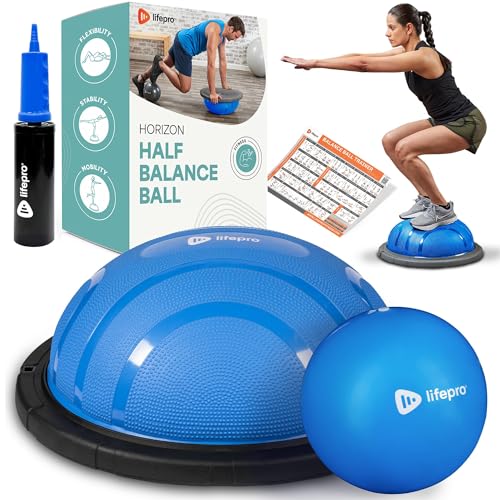
- Two balance-training orientations
- 440-pound capacity
- Includes pump and Pilates ball
Best For: Core, balance, and full-body training with stable footing
Best Overall

- 660-lb static-load anti-burst PVC construction
- Includes pump, plugs, remover, and exercise guide
- Suitable for core, Pilates, PT, prenatal, and desk use
Best For: Versatile home fitness and active sitting
Best With a Base

- Includes a stand and pump
- Non-slip surface supports workouts and desk sitting
- Anti-burst design for core training and home fitness
Best For: Users who want added stability and versatile home use
Best Small Ball
ProBody Pilates 9-Inch Core Ball
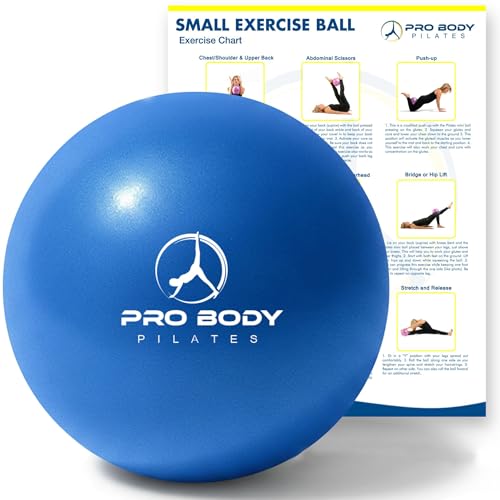
- Compact 9-inch design for targeted core and Pilates work
- Useful between the knees, hands, or lower back
- Includes exercise instructions and inflation accessories
Best For: Pilates, rehab-inspired routines, barre, and travel
Versatile Half-Ball Trainer
VEVOR Half Exercise Ball Trainer

- Half-ball platform for balance and full-body exercises
- Includes resistance bands and foot pump
- Compact design supports home or portable workouts
Best For: Full-body balance training and rehabilitation exercises
Compact Pilates Pick

- Small 9-inch size for targeted Pilates and core work
- Non-slip PVC surface supports controlled movement
- Includes two balls, straws, plugs, and plug pullers
Best For: Pilates, physical therapy, and compact home workouts
Full-Size Everyday Ball
Anti-Burst Core Stability Yoga Ball

- Slow-deflation design with a 330-pound capacity
- Textured ridges support traction during movement
- Includes pump and Figure-8 resistance band
Best For: Core training, posture work, therapy, and active sitting
Versatile Grip Pick – Trideer Yoga Ball
For shoppers comparing stability balls for core training, the Trideer Yoga Ball stands out for its textured grip, broad size selection, and included pump. Its anti-slip stripes and frosted PVC surface are designed to keep movements controlled during core, yoga, Pilates, and balance work.
Best For: Users who want a versatile exercise ball that can also support active sitting and posture-focused routines.
Pros:
- Anti-slip stripes and a frosted texture improve contact with the floor and body.
- Rated to hold up to 330 pounds with burst-resistant, slow-release construction.
- Available in five sizes and includes a pump, two air stoppers, and instructions.
- Useful for core workouts, flexibility training, yoga, Pilates, and active sitting.
Cons:
- The included pump varies by ball size and may be basic for frequent inflation.
- Choosing the correct size requires matching the ball to your height and goals.
This is a practical all-around option for home workouts, especially if grip and size flexibility matter more than specialized balance features.
Connected Training Pick – TRX Stability Ball
TRX Training Stability Ball for Improving Posture and Core Strength, Yoga Ball for Gym, 55 cm
Check Price On AmazonThe TRX Stability Ball is a focused choice among stability balls for core training, adding an immediate balance challenge to crunches, planks, squats, woodchops, and single-leg exercises. Its durable anti-slip vinyl construction is also designed for portability.
Best For: Users who want a portable training ball paired with access to guided TRX workouts.
Pros:
- Anti-slip vinyl is designed to withstand heavy use without popping.
- Supports core, flexibility, proprioception, strength, coordination, and balance exercises.
- Available in 55 cm and 65 cm sizes for different user heights.
- Includes access to the TRX Training Club app with more than 500 on-demand workouts.
Cons:
- Ships deflated, so it requires setup before use.
- Only two sizes are offered, providing less sizing flexibility than some alternatives.
- The app experience may be less useful if you do not want guided digital workouts.
Choose this model if structured programming and easy transport are priorities; the two-size range makes careful sizing especially important.
High-Capacity Choice – APEXUP Yoga Ball
For stability balls for core training that emphasize load capacity and sizing flexibility, the APEXUP Yoga Ball uses honeycomb PVC rated for up to 660 pounds. Its textured surface, slow-deflation design, and included pump support controlled home workouts.
Best For: Users seeking a high-capacity ball for core strengthening, balance training, stretching, or active sitting.
Pros:
- Honeycomb PVC is designed to hold up to 660 pounds and deflate slowly if punctured.
- Textured anti-slip surface helps limit movement on hard floors.
- Five sizes from 45 to 85 cm accommodate a wide range of users.
- Includes a pump and two air plugs for setup.
Cons:
- The product ships in multiple sizes, so selecting the correct fit requires checking the size guide.
- Its higher capacity may be unnecessary for users with basic exercise needs.
The APEXUP is a strong fit when capacity and size choice are central buying considerations, while its exercise-ball design keeps it suitable for varied routines.
Two-Sided Balance Pick – Lifepro Horizon Half Balance Ball
The Lifepro Horizon offers a different approach to stability balls for core training: a half balance ball with a sturdy base and two usable orientations. Flip it dome-up for classic stability work or base-up for a more demanding balance challenge.
Best For: Beginners and experienced users who want adjustable balance training for core work, squats, planks, push-ups, and stretching.
Pros:
- Two-sided design provides distinct dome-up and base-up training modes.
- Textured, non-slip surface and a 23.6-inch width provide a stable training platform.
- Supports up to 440 pounds on a PP/TPE base.
- Includes an air pump, Pilates ball, inflation straw, tape measure, and plugs.
Cons:
- Its half-ball format is less suitable for users specifically seeking a full round exercise ball.
- At 6.8 kg, it is heavier and less portable than many inflatable round balls.
- Its larger footprint requires dedicated storage space.
This is the most specialized option in the group, offering more controlled footing and exercise variety than a conventional round ball at the cost of greater size and weight.
Best Overall – ProBody Pilates Yoga Ball
If you want stability balls for core training that can also support Pilates, yoga, physical-therapy exercises, or desk seating, the ProBody Pilates Yoga Ball is a versatile choice. Its 65 cm size suits many adults, and it includes a pump, plugs, remover, and exercise guide.
Best For: Adults seeking one stability ball for home workouts, Pilates, PT routines, prenatal use, or active sitting.
Pros:
- Anti-burst PVC with a 660-pound static-load rating and 330-pound recommended daily-use load.
- BPA-free, latex-free, phthalate-free, and low-odor construction.
- Includes a dual-action pump, two plugs, plug remover, and illustrated exercise guide.
- Covered by a 12-month manufacturer promise.
Cons:
- The 65 cm size may not suit shorter or taller users as well as the available 55 cm or 75 cm options.
- It does not include a stabilizing base.
This is a strong all-purpose option when core training is only one part of your routine. Check the sizing guidance carefully if you plan to use it as a desk chair or for prenatal exercises.
Best With a Base – Retrospec Luna Exercise Ball
The Retrospec Luna is a practical pick among stability balls for core training when you want extra support between exercises. It includes a stand, pump, and non-slip surface, making it useful for home workouts, stretching, desk sitting, and pregnancy-related comfort.
Best For: Users who want a stability ball with a base for workouts, active sitting, resistance-band exercises, or pregnancy support.
Pros:
- Thick anti-burst material is designed for intense workouts.
- Includes a stand that adds stability during storage and resistance-band training.
- Non-slip surface supports steadier desk sitting and exercise.
- Includes a pump and carries a one-year limited warranty.
Cons:
- The listed 75 cm diameter and 65 cm size information should be checked carefully before ordering.
- At 4 pounds, it is heavier than the smaller ProBody ball in this roundup.
The included base distinguishes the Luna from standard inflatable balls. It is a sensible choice if you value a more stable setup, but verify the sizing details to ensure the ball fits your height and intended use.
Best Small Ball – ProBody Pilates 9-Inch Core Ball
For targeted stability balls for core training, the ProBody Pilates Ball uses a compact 9-inch design rather than a full-size exercise ball. It can be placed between the knees, hands, or lower back for Pilates, rehabilitation, pelvic-floor, inner-thigh, and glute exercises.
Best For: Pilates users, PT-inspired home routines, postpartum exercise after medical clearance, barre work, and travel-friendly core sessions.
Pros:
- Compact 9-inch size fits between adult knees and stores easily in a desk drawer or gym bag.
- Anti-burst, latex-free PVC is suited to controlled Pilates and rehabilitation exercises.
- Includes instructions, exercises, an extra plug, and two inflation straws.
- Covered by a one-year manufacturer warranty.
Cons:
- Its small size is not intended for full-body sitting or traditional large-ball exercises.
- Users should consult a physician before beginning an exercise program, particularly for therapeutic or postpartum use.
- The supplied notes caution against leaving it on finished wood surfaces when not in use.
This is the most specialized option here. Choose it when you want localized resistance and positioning support rather than a full-size ball for sitting, balance work, or broad movement patterns.
Versatile Half-Ball Trainer – VEVOR Half Exercise Ball Trainer
For shoppers comparing stability balls for core training, this VEVOR half-ball trainer offers an unstable platform for exercises such as planks, lunges, push-ups, stepping, and stretching. Its included resistance bands and foot pump make it a flexible option for home workouts and rehabilitation-focused training.
Best For: Full-body home workouts, balance training, and rehabilitation exercises.
Pros:
- Supports a wide range of strength, balance, and stretching exercises.
- Made with high-strength, explosion-proof materials.
- Includes resistance bands and inflation accessories.
- Compact and relatively lightweight for storage or travel.
Cons:
- The half-ball design is less suited to users seeking a traditional full exercise ball.
- The listed product dimensions are approximately 22.8 inches wide and 7.9 inches high.
This is a practical choice when you want one stability tool for varied movement patterns rather than a seated ball or standard round yoga ball. Its compact form and accessories add convenience for home and portable training.
Compact Pilates Pick – kisnbld 9-Inch Pilates Ball
This kisnbld mini ball is a compact option for shoppers seeking stability balls for core training, Pilates, stretching, and physical therapy. Its 9-inch size works well for targeted movements, posture work, back rehabilitation, and adding controlled resistance to home or office routines.
Best For: Pilates, physical therapy, targeted core work, and flexibility exercises.
Pros:
- Non-slip coated PVC surface is designed for a secure grip.
- Useful for core strength, posture, balance, toning, and rehabilitation.
- Inflates and deflates quickly with the included straws and plugs.
- Package includes two small balls and replacement-style accessories.
Cons:
- Its 9-inch diameter is intended for targeted exercises, not full-size ball workouts.
- The manufacturer advises keeping it away from woodwork, wooden furniture, and painted walls.
If you need a small Pilates ball rather than a large balance ball, this set is easy to store and adaptable for focused core, mobility, and rehab exercises. The two-ball package may also suit paired or alternating movements.
Full-Size Everyday Ball – Anti-Burst Core Stability Yoga Ball
This full-size exercise ball is a strong fit for shoppers comparing stability balls for core training, yoga, Pilates, physical therapy, or active sitting. Its textured surface, slow-deflation construction, included pump, and Figure-8 resistance band support a broad range of fitness and posture-focused uses.
Best For: Core training, posture work, physical therapy, pregnancy-ball use, and office seating.
Pros:
- Honeycomb anti-burst construction is designed to deflate slowly if punctured.
- Matte ridges provide traction on floors and gym mats.
- 330-pound capacity supports fitness, therapy, and seated use.
- Includes a foot pump, plug puller, air plugs, and Figure-8 resistance band.
Cons:
- The 23- to 26-inch size range may not fit every user or workspace.
- As an inflatable ball, it requires setup and periodic air-pressure checks.
This model stands out for versatility: it can support exercise sessions, recovery work, pregnancy-related use, and active office sitting. Check the available size against your height and intended seating or workout setup before buying.
How We Picked the Best Stability Balls for Core Training
We compared this selection by looking at construction, intended use, size variety, stated weight capacity, included accessories, portability, and overall versatility. Full-size balls are suited to seated exercises, planks, mobility work, and general core training, while half balls offer a stable base for balance drills, squats, and standing exercises. Small Pilates balls are better for adductor work, physical therapy, posture drills, and targeted core movements.
Because specifications can vary by seller and size, confirm the manufacturer’s dimensions, inflation guidance, and weight rating before purchase. A pump is especially useful when the ball needs regular pressure adjustments.
Quick Comparison
- Full-size exercise balls: Trideer, TRX, APEXUP, ProBody, Retrospec, and the ergonomic office-style ball are flexible choices for core, yoga, Pilates, and stability work.
- Half balance trainers: Lifepro Horizon and VEVOR provide a platform for balance training and standing strength exercises.
- Small Pilates balls: ProBody’s 9-inch ball and the kisnbld 9-inch ball suit targeted exercises, therapy, and limited spaces.
Key Buying Factors for Stability Balls for Core Training
Size and Fit
Choose a ball that lets your knees remain roughly level with your hips when seated, with feet flat on the floor. Height ranges are only a starting point because inflation and posture also affect fit. If multiple people will use it, consider an adjustable or multi-size option.
Construction and Safety
Look for anti-burst materials, reinforced seams, and a clearly stated weight limit. Anti-burst designs are intended to deflate gradually rather than split suddenly, but they are not indestructible. Keep the ball away from sharp surfaces, excessive heat, and pets, and inspect it regularly.
Training Style and Accessories
Consider whether you need a pump, resistance bands, a textured surface, or a base that limits rolling. A full-size ball supports dynamic core exercises, while a half ball can feel more controlled for balance work. Small balls are easier to position between the knees, ankles, or lower back.
Storage and Flooring
Measure your workout area before buying. Full-size balls need clearance in every direction, whereas half trainers and 9-inch balls are easier to store. Use the equipment on a clean, nonslip surface and avoid placing it directly on abrasive flooring.
Who Should Buy Which Stability Balls for Core Training?
Choose a full-size ball if you want one versatile tool for core workouts, Pilates, yoga, mobility, or an alternative seating option. Models with a pump are convenient for first-time buyers and regular home use.
Choose a half balance trainer if your priority is standing balance, lower-body stability, rehabilitation-style movements, or exercises that require a flatter base. These are often easier to control than a freely rolling ball.
Choose a small Pilates ball if you have limited space or want targeted core, pelvic-floor, posture, or physical-therapy exercises. They are compact and inexpensive, but they cannot replace a full-size ball for seated workouts or large-range balance exercises.
For most beginners, prioritize the correct size, anti-burst construction, and a reliable pump over extra accessories. Those basics make Stability Balls for Core Training safer, easier to use, and more likely to become part of a consistent routine.