Vibrating foam rollers combine traditional self-myofascial release with adjustable vibration to help warm up muscles, ease post-workout tightness, and support mobility work.
We compared 10 popular options across size, intensity settings, construction, portability, and value so you can choose the right roller for your training routine and recovery goals.
Best 10 Vibrating Foam Rollers Picks for 2026
Premium Full-Body Pick

- Five app-adjustable vibration settings
- Wave grooves add pressure and traction
- 180-minute battery life with carrying pouch
Best For: Full-body recovery and customizable rolling
Longest Coverage
Vulken Extra Long Vibrating Foam Roller
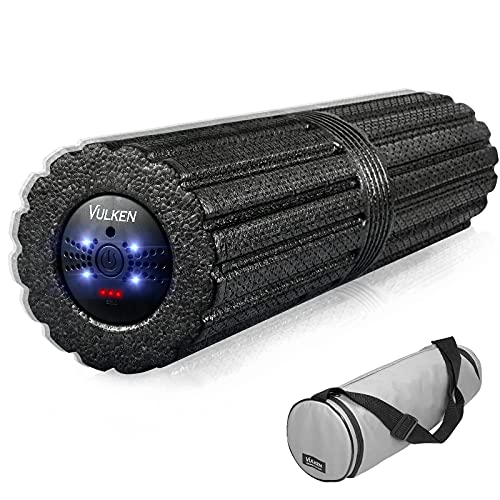
- 17-inch surface covers more muscle area
- Four modes, including auto-pulsating
- Lightweight 2.1-pound design with carrying bag
Best For: Back, leg, and whole-body recovery
Back and Neck Specialist

- Contoured to target muscles beside the spine
- Five app-adjustable vibration settings
- Up to 200 minutes of battery life
Best For: Focused back and neck muscle relief
Manual Budget Alternative
ProsourceFit High-Density Roller

- Firm EPP foam supports up to 300 pounds
- Works for recovery, yoga, and Pilates
- Water-resistant and low maintenance
Best For: Simple, battery-free muscle recovery
Best Non-Electric Deep Tissue Option
TriggerPoint GRID 1.0 Foam Roller

- Extra-firm EVA foam for deeper compression
- Multi-density ridges and nodules for targeted rolling
- Durable hollow-core design for frequent use
Best For: Manual deep-tissue recovery without batteries or vibration
Versatile Recovery
5-Speed Rechargeable Vibrating Foam Roller

- Five speeds plus variable-speed control
- High-density EVA foam construction
- Approximately 4–8 hours of battery use
Best For: Customizable full-body recovery at home, the gym, or yoga class
Simple Deep-Tissue Option
PURSONIC VFR399 Vibrating Foam Roller

- Five adjustable vibration levels
- Firm, high-density foam design
- USB rechargeable and portable
Best For: Users wanting straightforward powered recovery on the go
Textured Full-Body Relief
Kucttic Wave Vibrating Foam Roller
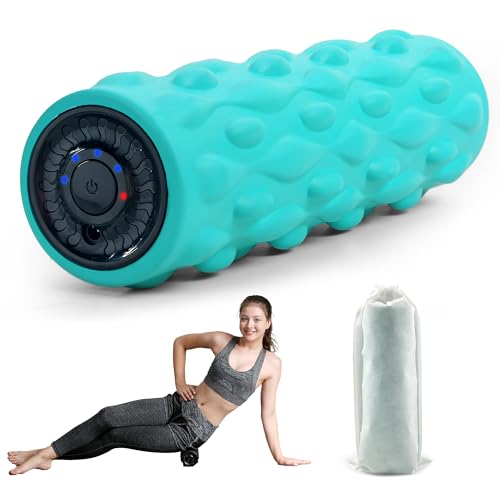
- Wave grooves and three density patterns
- Five settings from 1500 to 3200 RPM
- Includes a protective carrying pouch
Best For: Targeted, textured rolling for workouts, travel, and therapy routines
Premium Full-Body Pick – Therabody WaveRoller
The Therabody WaveRoller combines firm, high-density EVA foam with five vibration settings for a more adjustable vibrating foam rollers experience. Its wave-textured surface is designed to add pressure and traction while covering larger muscle groups.
Best For: Full-body recovery, larger muscle groups, and users who want app-adjustable vibration.
Pros:
- Five vibration intensity settings can be adjusted through the Therabody App.
- Wave grooves add pressure and traction to the rolling experience.
- Provides up to 180 minutes of battery life and includes a protective carrying pouch.
Cons:
- Its firm construction may feel intense for new foam-roller users.
- At 12 inches long, it offers less coverage than the 17-inch Vulken roller.
The WaveRoller is a feature-rich choice for shoppers who want deep, customizable rolling rather than a basic manual roller. Its app support and textured foam make it especially appealing for regular recovery routines.
Longest Coverage – Vulken Extra Long Vibrating Foam Roller
The Vulken Extra Long is a practical vibrating foam roller for covering more of the body in one pass. Its 17-inch length, four vibration modes, and motor reaching up to 3800 RPM make it suited to back, leg, and whole-body recovery sessions.
Best For: Athletes and users who want extra-wide coverage for the back and legs.
Pros:
- 17-inch length covers more muscle area than standard 12-inch rollers.
- Offers three intensity levels plus an auto-pulsating mode.
- Lightweight 2.1-pound EPP construction includes a carrying bag.
Cons:
- The firm design may be too intense for users seeking gentle pressure.
- The supplied notes do not specify total battery runtime.
Choose the Vulken when coverage and portability matter more than app connectivity. It is a straightforward option for gym bags, travel, and larger muscle groups.
Back and Neck Specialist – Therabody WaveDuo
The Therabody WaveDuo is a specialized vibrating foam roller shaped to target muscles alongside the spine. Its contoured design, firm high-density foam, and five vibration settings focus the massage on the back and neck while avoiding added pressure directly on the spine.
Best For: Targeted back and neck relief, especially around the muscles beside the spine.
Pros:
- Contoured shape is designed for the back, neck, and areas beside the spine.
- Five vibration intensities can be customized through the Therabody App.
- Provides up to 200 minutes of battery life and includes a protective pouch.
Cons:
- Its specialized shape is less versatile for full-body rolling.
- Firm pressure may not suit users who prefer a softer roller.
The WaveDuo makes the most sense when back and neck targeting is the priority. Its contoured profile offers a more focused alternative to a traditional cylindrical roller.
Manual Budget Alternative – ProsourceFit High-Density Roller
The ProsourceFit High-Density Foam Roller is a non-vibrating option for shoppers who want firm, simple muscle work without batteries or electronics. Its 12-inch EPP construction is designed for deep pressure and can be used across the back, legs, calves, hamstrings, IT band, and glutes.
Best For: Buyers who want an affordable, low-maintenance manual alternative to vibrating foam rollers.
Pros:
- Firm high-density foam provides deeper pressure and supports up to 300 pounds.
- Versatile for recovery, stretching, yoga, Pilates, and balance work.
- Water-resistant EPP construction is hygienic and easy to maintain.
Cons:
- It has no vibration or electronic intensity controls.
- The 12-inch size provides less coverage than longer rollers.
- High-density firmness may feel sensitive for new users.
This roller is a sensible pick if you value simplicity, durability, and portability over powered massage. It also comes in several size options, including longer models for shoppers who need more coverage.
Best Adjustable Vibration – FITINDEX 5-Speed Vibrating Foam Roller
Among vibrating foam rollers, the FITINDEX FT-YB-03 stands out for its adjustable intensity and textured, three-density surface. It combines rolling pressure with vibration for pre-workout warmups, post-workout recovery, mobility work, and general muscle massage.
Best For: Users who want multiple vibration settings and a compact roller for whole-body use, travel, or physical-therapy routines.
Pros:
- Five vibration settings from 1,500 to 3,200 RPM allow more precise intensity adjustments.
- Three density wave patterns provide low-, medium-, and high-density rolling surfaces.
- USB-C charging, a compact 11.4-inch length, and a 3-pound weight support portable use.
- Provides over two hours of use on the highest setting after a full charge.
Cons:
- A full charge takes about five hours.
- Its 3-pound weight is heavier than the other FITINDEX model listed here.
The FT-YB-03 is a flexible option when vibration customization matters most. Its mix of five speeds, three surface densities, and USB-C charging makes it well suited to users who want one roller for varied recovery routines.
Best Non-Electric Deep Tissue Option – TriggerPoint GRID 1.0 Foam Roller
The TriggerPoint GRID 1.0 is not one of the vibrating foam rollers, but it is a useful comparison for shoppers who prefer a straightforward, extra-firm manual roller. Its multi-density surface and hollow EVA-foam construction are designed for targeted compression and repeated muscle-recovery sessions.
Best For: Users seeking a durable, extra-firm manual roller for deep tissue work without charging or electronic controls.
Pros:
- Three-dimensional ridges and nodules let users vary pressure across targeted body areas.
- Extra-firm EVA foam delivers deeper compression than traditional foam rollers.
- Hollow-core construction is designed to retain its shape with frequent use.
- The 13-inch format supports whole-body rolling and is easy to position.
Cons:
- It has no vibration function or electronic intensity settings.
- The extra-firm design may be less suitable for users who prefer gentler rolling.
Choose the GRID 1.0 if simplicity and firm manual pressure are more important than powered massage. Its durable construction and varied surface can provide a controlled alternative to vibrating foam rollers.
Best Long-Lasting Battery – FITINDEX 4-Speed Vibrating Foam Roller
The FITINDEX FT-YB-02 is a practical choice among vibrating foam rollers for users who prioritize extended runtime and portability. It pairs four vibration levels with a firm, textured foam body for pre-workout preparation, post-workout recovery, and whole-body muscle support.
Best For: Active users who want a lightweight vibrating roller with more than four hours of use per charge and a longer 15.8-inch body.
Pros:
- Four vibration levels range from 1,400 to 2,600 RPM for adjustable relief.
- Provides over four hours of use per charge and takes about three hours to recharge.
- At about 2.1 pounds, it is relatively lightweight for on-the-go use.
- The longer 15.8-inch design supports rolling across the back, legs, shoulders, and other areas.
Cons:
- It offers four speeds, fewer than the five-speed FITINDEX model.
- Its firm foam construction may feel intense for users seeking softer cushioning.
The FT-YB-02 is a strong fit when battery endurance and portability outweigh the need for the highest vibration range. Its longer body and whole-body application make it convenient for regular gym or travel routines.
Versatile Recovery – 5-Speed Rechargeable Vibrating Foam Roller
This vibrating foam roller combines rolling pressure with targeted vibration for warm-ups, cooldowns, yoga, Pilates, and everyday muscle recovery. Its five speeds plus variable-speed mode let you adjust the intensity for lighter relaxation or deeper trigger-point work.
Best For: Full-body recovery users who want multiple intensity options and extended battery life.
Pros:
- Five speeds plus variable-speed control, ranging from 800 to 3600 RPM.
- High-density EVA foam provides a firm, supportive rolling surface.
- 4000 mAh battery provides approximately 4–8 hours of use per charge.
- Suitable for targeting the back, legs, arms, hips, and other areas.
Cons:
- At 1150 g, it may be heavier than some compact rollers.
- The product recommends limiting sessions to about 15 minutes.
Choose this model if customizable vibration and longer portable use matter most. Beginners or users sensitive to strong stimulation can start with levels 1–2.
Simple Deep-Tissue Option – PURSONIC VFR399 Vibrating Foam Roller
The PURSONIC VFR399 is a firm vibrating foam roller designed to add powered massage to regular rolling. Five intensity levels support gradual adjustments, while its USB-rechargeable, lightweight design makes it practical for pre-workout warm-ups and post-exercise recovery.
Best For: Fitness users seeking a straightforward, portable roller with adjustable intensity.
Pros:
- Five vibration levels allow gradual intensity changes.
- Designed to support muscle relaxation, circulation, and recovery.
- Uses durable ABS plastic and high-density foam.
- Compact and USB rechargeable for convenient transport.
Cons:
- Its firm construction may feel intense for users who prefer softer rollers.
- The supplied details do not specify battery runtime.
This is a practical pick when portability and simple controls are more important than specialized textures or a larger speed range. Its firm profile is best suited to users comfortable with deeper rolling pressure.
Textured Full-Body Relief – Kucttic Wave Vibrating Foam Roller
This vibrating foam roller pairs adjustable vibration with wave grooves and three density patterns for varied pressure across large and small muscle groups. It also includes a carrying pouch, making it a useful option for workouts, travel, yoga, Pilates, or physical-therapy routines.
Best For: Users who want textured rolling, multiple density zones, and a travel-friendly design.
Pros:
- Five customizable vibration settings from 1500 to 3200 RPM.
- Wave grooves add traction and extra pressure dimensions.
- Three density patterns support use on areas including the back, legs, shoulders, and feet.
- Carrying pouch and compact 13-inch design improve portability.
Cons:
- Battery life is listed as over two hours at the highest speed.
- Charging can take up to five hours.
- The roller weighs 2.2 pounds, so it is not the lightest option.
Consider this model if surface texture and pressure variety are priorities. Its standby mode after 15 minutes and portable pouch add convenience, while the shorter high-speed runtime may matter to frequent users.
How We Picked the Best Vibrating Foam Rollers
We evaluated these Vibrating Foam Rollers based on the features that matter most during regular use: vibration adjustability, roller size, surface design, firmness, battery convenience, durability, and overall versatility. We also considered whether each model is better suited to broad muscle groups, targeted areas, travel, or full-body recovery.
Because product specifications can vary by model and seller, check the current listing for battery details, charging requirements, dimensions, and included accessories before buying.
Quick Comparison
| Feature | What to look for | Why it matters |
|---|---|---|
| Vibration settings | Multiple intensity levels | Lets you adjust pressure and stimulation for warmups, recovery, and sensitive areas. |
| Length | About 12 to 17 inches | Longer rollers cover large muscle groups more easily, while shorter designs are easier to pack. |
| Surface | Smooth, ridged, or contoured foam | Determines how broadly or precisely the roller contacts your muscles. |
| Power | Rechargeable battery | Offers cordless use, but runtime and charging time still affect convenience. |
Key Buying Factors for Vibrating Foam Rollers
Choose the Right Firmness and Texture
High-density foam provides stable pressure and is often preferred for larger muscle groups such as the thighs, glutes, calves, and back. Textured rollers can add targeted stimulation, while smoother surfaces may feel more comfortable for beginners or sensitive areas.
Match the Size to Your Routine
A longer roller can make it easier to work both legs or the back efficiently. Compact models are more practical for gym bags, travel, and targeted work around smaller muscle groups. Contoured designs may be especially useful for the neck, spine, or upper back, but they are less universal than a standard cylindrical roller.
Consider Intensity Control and Battery Life
Several speed settings provide more flexibility than a single fixed vibration level. Beginners may prefer lower settings, while experienced users may want stronger stimulation for dense muscle tissue. A rechargeable design is convenient, but look for clear charging indicators and enough runtime for multiple sessions.
Use Vibration as a Supplement
Vibration does not replace proper movement, stretching, strength training, or medical care. Begin with a low setting, avoid rolling directly over joints and bones, and stop if you experience sharp pain, numbness, or unusual discomfort.
Who Should Buy Which Vibrating Foam Rollers?
- For full-body recovery: Choose a firm, standard-length roller with several vibration levels and a durable surface.
- For larger muscle groups: Consider an extra-long model for easier coverage of the back, legs, and glutes.
- For targeted neck and back work: A contoured design can provide more focused contact than a traditional cylinder.
- For beginners: Prioritize moderate firmness, low-intensity settings, and a smooth or lightly textured surface.
- For portability: Select a compact rechargeable roller with simple controls and a dependable battery.
- For budget-conscious shoppers: Focus on the features you will actually use—multiple speeds, solid construction, and easy charging—rather than extra modes.