The best waterproof heart rate monitors help you track effort accurately through sweaty workouts, rainy runs, pool sessions, and demanding training blocks. This roundup compares chest straps, optical armbands, and wearable fitness trackers to help you find the right fit.
We focus on water resistance, sensor accuracy, connectivity, battery life, comfort, and compatibility with popular watches, phones, and fitness apps.
Best 10 Waterproof Heart Rate Monitors Picks for 2026
Most Accurate Pick

- Highly accurate sensor
- Bluetooth, ANT+, and 5 kHz connectivity
- Fully waterproof with 400-hour battery life
Best For: Athletes prioritizing accuracy and broad compatibility
Best for Garmin Training

- Real-time heart rate and HRV data
- Running dynamics with compatible Garmin watches
- Records and syncs workouts, including swim data
Best For: Garmin users seeking detailed training metrics
Best Battery Life
GEOID HS500 Heart Rate Monitor

- IP67 waterproof rating
- ANT+ and Bluetooth compatibility
- Up to 800 hours from a replaceable CR2032 battery
Best For: Multi-sport users wanting long battery life
Most Comfortable Armband

- Soft, breathable armband design
- Connects to up to three Bluetooth devices
- 38 hours of operation per charge
Best For: Athletes preferring an armband over a chest strap
Reliable Chest-Strap Pick
- High-accuracy heart rate sensor
- Works with compatible equipment and apps
- Up to 400 hours of battery life
Best For: Everyday training with a trusted chest strap
Water-Ready Training Value
- IP67 waterproof heart rate sensor
- Bluetooth and ANT+ connectivity
- Up to 300 hours of battery life
Best For: Connected workouts, cycling, and fitness apps
All-Day Smart Tracking
- IP68 waterproof wrist-worn design
- 24/7 heart rate and sleep tracking
- 120+ sport modes and smart tools
Best For: Everyday wellness tracking with smartwatch features
Long-Run Precision Pick

- ECG-based tracking with HRV support
- Bluetooth and ANT+ connectivity
- IPX7 rating and up to 500-hour battery
Best For: Endurance athletes and data-focused training
Comfortable Armband Choice

- IP68 waterproof optical sensor
- Wearable on forearm, bicep, or tricep
- Bluetooth, ANT+, and HRV support
Best For: Users who prefer an armband over a chest strap
Workout-Zone Indicator

- LEDs show five heart rate zones
- Bluetooth and ANT+ connectivity
- 30-meter waterproof washable armband
Best For: Users who want instant training-zone feedback
Most Accurate Pick – Polar H10 Heart Rate Monitor
For shoppers comparing waterproof heart rate monitors, the Polar H10 stands out for its stated accuracy, broad connectivity, and fully waterproof design. Its chest strap supports Bluetooth, ANT+, and 5 kHz connections, while built-in memory can store multiple hours of data.
Best For: Athletes who want highly accurate readings and wide device compatibility.
Pros:
- Recognized by Polar as its most accurate heart rate sensor
- Supports Bluetooth, ANT+, and 5 kHz connections, including simultaneous connections
- Fully waterproof with internal memory for multiple hours
- Battery is included and rated for up to 400 hours
Cons:
- Uses a chest strap rather than an armband-style design
- Requires a CR2025 battery; other battery sizes may cause malfunction
The Polar H10 is a strong choice when measurement precision and connectivity matter most. Its chest-strap format and replaceable button-cell battery are worth considering before purchase.
Best for Garmin Training – Garmin HRM 600
The Garmin HRM 600 is a data-focused option among waterproof heart rate monitors, sending real-time heart rate and HRV data to compatible Garmin devices, equipment, and apps. It also records workouts when a watch cannot be worn and supports swim-activity data syncing.
Best For: Garmin users who want running dynamics, workout recording, and swim-data support.
Pros:
- Sends real-time heart rate and HRV data to compatible devices
- Provides additional running dynamics such as stride length and vertical oscillation
- Records workouts without a watch and syncs data to Garmin Connect
- Stores heart rate data during swimming and offers up to two months of battery life
Cons:
- Advanced features require a compatible Garmin smartwatch
- Battery life is shorter than some replaceable-battery chest sensors
Choose the HRM 600 if you already use Garmin Connect or a compatible Garmin watch and want deeper training metrics. Its machine-washable strap and rechargeable battery add convenience for frequent use.
Best Battery Life – GEOID HS500 Heart Rate Monitor
The GEOID HS500 combines ANT+ and Bluetooth compatibility with an IP67 waterproof rating, making it a practical value-oriented choice among waterproof heart rate monitors. Its replaceable CR2032 battery is rated for up to 800 hours, and an LED confirms startup and connection status.
Best For: Runners, cyclists, and fitness users seeking long battery life and flexible app compatibility.
Pros:
- IP67 waterproof rating for exercise use
- Supports both ANT+ and Bluetooth connections
- Battery life is rated for up to 800 hours
- Compatible with phones, sports watches, bike computers, and fitness equipment
Cons:
- Swimming is not recommended
- Bluetooth should be connected through the app rather than directly through phone settings
The HS500 is appealing if you want extended battery life without giving up common ANT+ and Bluetooth connections. Its IP67 protection suits workouts, but swimmers should choose a monitor specifically recommended for swimming.
Most Comfortable Armband – COROS Heart Rate Monitor
The COROS Heart Rate Monitor uses a soft, breathable armband instead of a traditional chest strap, making it a comfort-focused option for workout tracking. It connects via Bluetooth to up to three devices, automatically detects when it is worn, and provides 38 hours of operation per charge.
Best For: Users who prefer a lightweight armband and Bluetooth-only connections.
Pros:
- Soft, breathable band designed for comfortable wear
- Can pair with up to three Bluetooth devices simultaneously
- Wear detection automatically powers the monitor on and off
- Rechargeable battery provides up to 38 hours of operation
Cons:
- Bluetooth only; it is not compatible with ANT+
- Designed for sports and activities, not daily heart rate tracking
- USB charging cable is included, but a Type-C adapter is not
The COROS monitor is a good fit for athletes who find chest straps uncomfortable and primarily use Bluetooth-enabled watches, apps, or indoor equipment. Confirm your device supports Bluetooth before buying.
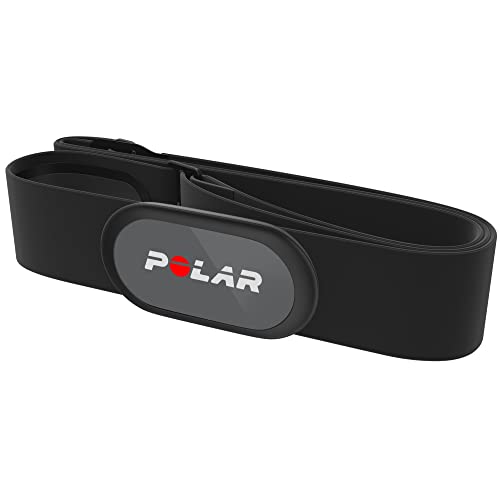
Reliable Chest-Strap Pick – Polar H9 Heart Rate Sensor
Polar H9 Heart Rate Sensor – ANT + / Bluetooth - Waterproof HR Monitor with Soft Chest Strap, XXS-S
Check Price On AmazonThe Polar H9 is a straightforward chest-strap option for shoppers comparing waterproof heart rate monitors for everyday training. Its high-accuracy sensor supports compatible equipment and smartphone apps, while the included CR2025 battery is rated for up to 400 hours.
Best For: Everyday exercisers who want a trusted, app-compatible chest-strap heart rate sensor.
Pros:
- Designed for high-accuracy heart rate tracking.
- Works with HRM-compatible equipment and popular smartphone apps.
- Includes a soft strap and CR2025 battery with up to 400 hours of stated battery life.
- Backed by a two-year manufacturer warranty.
Cons:
- The supplied notes do not specify a waterproof or water-resistance rating.
- A chest strap may be less convenient than a wrist-worn tracker for some users.
- Available strap sizing should be checked before purchase.
The H9 keeps the focus on dependable heart rate data rather than extra smartwatch features. It is a sensible choice if compatibility, established tracking performance, and long battery life matter more than a display or explicitly documented waterproofing.
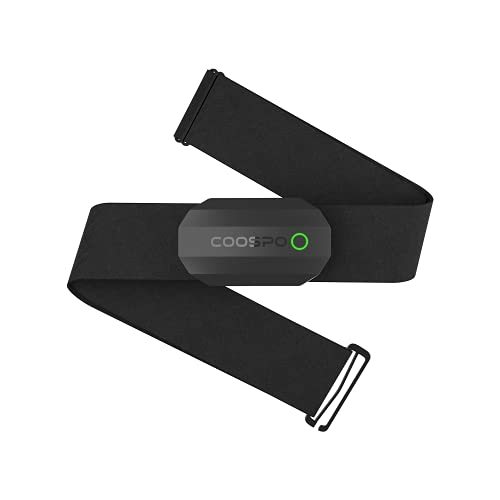
Water-Ready Training Value – COOSPO H808S Chest Strap
The COOSPO H808S is a strong fit for shoppers seeking waterproof heart rate monitors for workouts, cycling, and connected training. Its IP67-rated sensor uses Bluetooth 4.0 and ANT+ to send real-time heart rate data to compatible watches, bike computers, apps, and fitness equipment.
Best For: Athletes who need a water-resistant chest strap with broad Bluetooth and ANT+ connectivity.
Pros:
- IP67 waterproof rating for added workout protection.
- Supports Bluetooth 4.0 and ANT+ dual-mode connections.
- Claims ±1 BPM accuracy for real-time exercise monitoring.
- Replaceable CR2032 battery is rated for up to 300 hours.
Cons:
- The strap electrodes should be moistened before use.
- The manufacturer recommends replacing the strap after six months or 300 washes.
- Pairing should be completed inside the fitness app rather than the phone’s general Bluetooth menu.
With explicit IP67 protection and support for both major wireless transmission standards, the H808S is particularly practical for connected workouts. Its maintenance and pairing requirements are manageable, but they are worth noting for first-time chest-strap buyers.
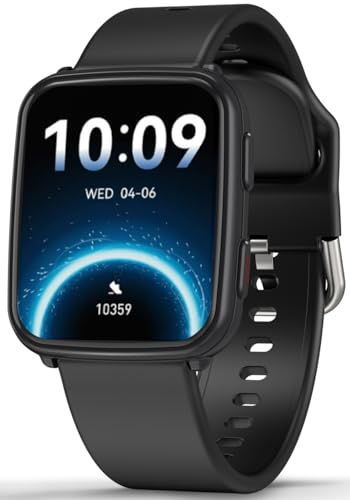
All-Day Smart Tracking – MorePro Fitness Tracker
The MorePro Fitness Tracker offers a wrist-worn alternative for shoppers comparing waterproof heart rate monitors with broader wellness features. Its IP68 design is intended for sweat, rain, and hand-washing, while the tracker adds 24/7 heart rate monitoring, activity tracking, sleep data, and more than 120 sport modes.
Best For: Users who want heart rate tracking combined with everyday smartwatch and wellness tools.
Pros:
- IP68 waterproof design for sweat, rain, and hand-washing.
- Provides 24/7 heart rate monitoring plus on-demand blood oxygen checks.
- Tracks sleep, steps, calories, and workouts across 120+ sport modes.
- Offers up to seven days of normal-use battery life.
Cons:
- The supplied notes state that health features are not for medical use.
- It is a smartwatch-style tracker rather than a dedicated chest-strap sensor.
- Compatibility is listed for Android 7.0+ and iOS 13.0+ smartphones, not PCs or tablets.
The MorePro is the most feature-rich choice here for all-day wear, combining heart rate data with notifications, sleep tracking, cycle tracking, and activity tools. Choose it when convenience and broad wellness monitoring matter more than dedicated chest-strap measurement.
Long-Run Precision Pick – CYCPLUS H2Pro Chest Strap
If you want waterproof heart rate monitors for structured training, the CYCPLUS H2Pro combines ECG-based tracking with Bluetooth and ANT+ connectivity. Its IPX7 rating, comfortable adjustable strap, and claimed 500-hour battery make it a practical choice for frequent workouts.
Best For: Athletes who want long battery life, HRV data, and broad compatibility with fitness devices and apps.
Pros:
- ECG algorithm is designed to provide stable, precise real-time readings.
- Supports both Bluetooth and ANT+ with devices including Apple Watch, Garmin watches, and Wahoo bike computers.
- IPX7 waterproof and dustproof construction suits sweaty or wet training conditions.
- Built-in CR2032 battery provides up to 500 hours of operation.
Cons:
- Chest-strap design may feel less convenient than an armband for some users.
- HRV-focused features may be more than casual exercisers need.
The H2Pro stands out when accuracy, connectivity, and low-maintenance battery life matter most. It is especially compelling for endurance athletes and users building a data-focused training routine.
Comfortable Armband Choice – Scosche Rhythm+ 2.0
Among waterproof heart rate monitors, the Scosche Rhythm+ 2.0 is a flexible alternative to a chest strap. Its optical sensor tracks heart rate from the forearm, bicep, or tricep, while Bluetooth and ANT+ support make it easy to pair with watches, equipment, and training apps.
Best For: Runners, cyclists, and gym users who prefer a lightweight armband with HRV features.
Pros:
- IP68 waterproof construction handles sweat, rain, and demanding workouts.
- Adjustable breathable band can be worn on the forearm, bicep, or tricep.
- Bluetooth and ANT+ support broadens compatibility with popular devices and apps.
- HRV mode captures RR interval data for training, sleep, and stress insights.
Cons:
- Up to 24 hours of battery life requires substantially more frequent charging than the H2Pro.
- Optical armband readings may not suit users specifically seeking a chest-strap ECG sensor.
The Rhythm+ 2.0 is a strong convenience pick for people who find chest straps restrictive. Its waterproof build and adaptable placement work well for varied workouts, although its shorter battery life means charging should be part of your routine.
Workout-Zone Indicator – C022Pro Heart Rate Armband
The C022Pro is one of the more visual waterproof heart rate monitors, using LED indicators to show your current training zone. Its four-channel optical sensor, dual connectivity, washable strap, and 30-meter waterproof rating make it suited to running, cycling, and gym sessions.
Best For: Exercisers who want quick, at-a-glance heart rate zone guidance during workouts.
Pros:
- LED indicators identify zones from warm-up through maximum effort.
- Bluetooth and ANT+ pairing works with smartphones, Peloton, Wahoo, Polar, Strava, and other compatible devices.
- Four-channel optical sensing is designed to reduce motion artifacts during intense exercise.
- Lightweight washable strap has a 30-meter waterproof rating.
Cons:
- Supplied notes do not specify battery life.
- Its zone-light system may be less useful to users who primarily review data after training.
- The listed compatible-device details are less extensive than those provided for some competing models.
The C022Pro makes workout intensity easy to interpret without constantly checking a watch or phone. Choose it if visual zone feedback is a priority and you are comfortable confirming battery details before purchase.
How We Picked These Waterproof Heart Rate Monitors
We selected models across the main heart-rate-monitor categories: chest straps for highly responsive workout data, optical armbands for improved comfort, and wrist-based trackers for broader health and activity features. Each product was considered for water resistance, connection standards, battery life, wearing comfort, and compatibility with training equipment and apps.
Waterproof ratings vary, so check the manufacturer’s specifications before using a monitor for swimming. An IP rating may protect against sweat, rain, and splashes without guaranteeing safe submersion, while some dedicated sports sensors are designed for use in water.
Quick Comparison
| Type | Best For | Main Advantage | Potential Limitation |
|---|---|---|---|
| Chest strap | Serious training | Fast, accurate response | Less comfortable for some users |
| Optical armband | Comfort-focused workouts | Easy to wear and adjust | May respond more slowly during intervals |
| Fitness tracker | Daily health monitoring | Multiple wellness features | Usually less responsive during intense changes |
Key Buying Factors for Waterproof Heart Rate Monitors
Water Resistance
For sweat and outdoor training, splash protection is often sufficient. For pool workouts, choose a monitor explicitly rated for swimming or submersion. Do not assume that every product labeled “waterproof” can be worn at any depth.
Sensor Style and Fit
Chest straps typically provide the quickest readings because they measure electrical signals near the heart. Armbands use optical sensors and can be more comfortable, but placement and snugness affect performance. A tracker is convenient for everyday use but may be less reliable during rapid-intensity intervals.
Connectivity
ANT+ is useful for bike computers, gym equipment, and compatible sports watches, while Bluetooth works well with phones and many training apps. Dual-band models offer more flexibility. Check the number of simultaneous connections if you train with multiple devices.
Battery Life and Maintenance
Long battery life reduces interruptions, especially for frequent training. Removable batteries can be convenient for chest straps, while rechargeable designs may simplify everyday use. Rinse straps after sweaty or chlorinated workouts and follow the care instructions to protect the sensor and electrodes.
Who Should Buy Which Waterproof Heart Rate Monitors?
Choose a chest strap if accuracy and rapid heart-rate response matter most for interval training, racing, cycling, or structured workouts. Choose an optical armband if you want a less restrictive fit while retaining ANT+ and Bluetooth connectivity. Choose a fitness tracker if you want heart-rate readings alongside sleep, blood oxygen, steps, calories, and other daily metrics.
For the best match, prioritize the activity you perform most often, confirm device compatibility, and select the water rating that matches your actual use rather than relying on a broad marketing label.