The best adjustable plyometric boxes make it easier to train jumps, step-ups, agility, and lower-body power without dedicating space to several fixed platforms.
We compare 10 options across height adjustability, materials, landing comfort, stability, weight capacity, and setup so you can choose a box that fits your training style and available space.
Best 10 Adjustable Plyometric Boxes Picks for 2026
Best Heavy-Duty Pick

- Three height levels up to 24 inches
- Welded steel frame with 400-pound capacity
- Textured rubber top and nesting design
Best For: Serious home gyms needing a stable, durable box
Best Steel Value
Fuel Pureformance Adjustable Plyo Box
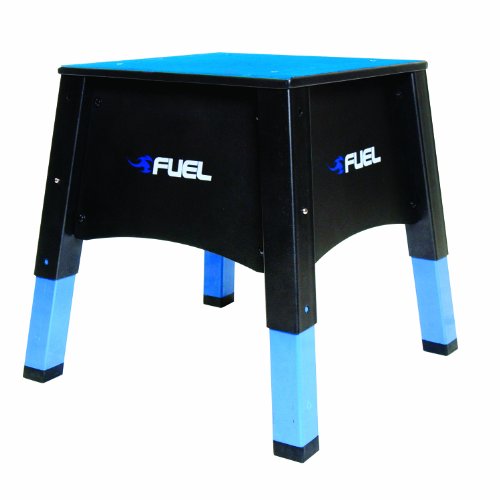
- Adjusts to 14, 18, and 22 inches
- Steel frame with powder-coated finish
- Rubber feet and non-slip landing surface
Best For: Home users wanting simple adjustable steel training equipment
Best Lightweight Option
BalanceFrom 3-in-1 Foam Plyo Box

- Rotates for 16-, 20-, and 24-inch heights
- High-density foam softens impact
- Lightweight and easy to reposition
Best For: Beginners and home users prioritizing portability
Best Soft-Padded Design

- Wooden core with EVA foam cushioning
- Three height options for varied workouts
- Non-slip surface and high stated capacity
Best For: Home workouts needing cushioning with added structure
Most Stable Steel Pick
JFIT Adjustable Plyometric Box
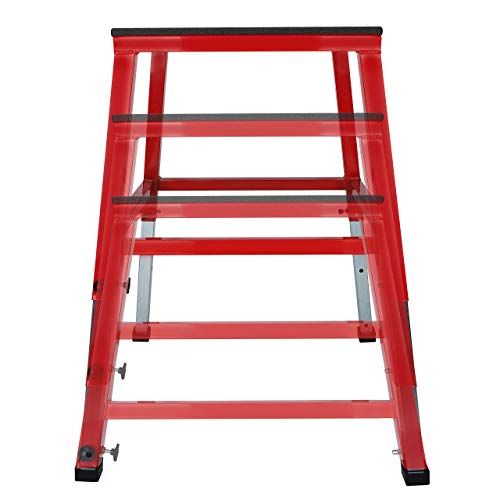
- Three height settings from 12 to 20 inches
- Steel frame rated for up to 550 pounds
- Fully assembled with non-slip landing features
Best For: Users seeking a stable, ready-to-use box for progressive training
Best Compact Wood Option
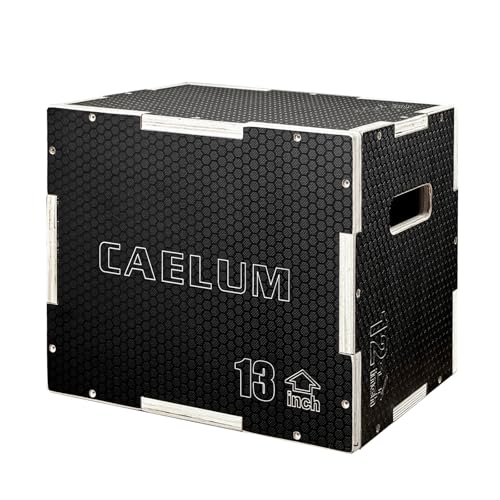
- Three heights from 12 to 16 inches
- Textured top and sanded edges improve usability
- Lightweight design with side handles
Best For: Home users wanting a lower-height wooden training box
Best Height Range
Stamina X Adjustable Plyo Step-Up Box

- Four settings from 12 to 24 inches
- Large 15.5-by-25.5-inch top platform
- Steel, assembly-free design with non-slip surface
Best For: Users progressing through multiple jump and step-up heights
Best Overall
Valor Fitness Adjustable Plyo Box

- Five height positions from 18 to 31 inches
- 400-pound capacity with steel construction
- Non-slip top and locking height system
Best For: Progressive home-gym and sports-performance training
Best Compact Option
Three-Level Steel Adjustable Plyo Box

- Three heights: 14, 18, and 22 inches
- Textured 16-by-16-inch non-slip platform
- Rubber feet help protect floors and add stability
Best For: Beginners and intermediate users needing moderate jump heights
Best Multi-Size Set
VEVOR Steel Plyometric Box Set

- Includes 12-, 18-, and 24-inch platforms
- 500-pound stated weight capacity
- Textured tops and rubber feet support stable training
Best For: Home gyms needing multiple fixed-height platforms
Best Heavy-Duty Pick – REP Adjustable Plyo Box
The REP Adjustable Plyo Box is a strong choice among adjustable plyometric boxes for athletes who want multiple training heights in a durable, space-conscious design. Its welded steel frame, textured rubber platform, and three height levels support box jumps, step-ups, squats, and other home-gym exercises.
Best For: Serious home gyms and users who prioritize steel construction, stability, and a 400-pound capacity.
Pros:
- Three adjustable levels with a maximum height of 24 inches.
- Welded steel construction supports up to 400 pounds.
- Textured rubber top provides a non-slip landing surface.
- Nesting design helps save storage space.
Cons:
- At 40 pounds, it is less portable than foam alternatives.
- The supplied details list a silver finish and aluminum material, while the product description emphasizes steel construction.
Choose this model if stability and durability matter more than lightweight portability. It is a practical, professional-style option for repeated jumping and strength workouts.
Best Steel Value – Fuel Pureformance Adjustable Plyo Box
The Fuel Pureformance Adjustable Plyo Box offers a straightforward three-height setup for box jumps, speed work, agility drills, and cardiovascular training. Its spring-button adjustment, rubber feet, and non-slip landing surface make it a practical option for home workouts.
Best For: Budget-conscious users who want a steel adjustable box with 14-, 18-, and 22-inch height settings.
Pros:
- Quick spring-button adjustment across three heights.
- Steel construction with a blue-and-black powder-coated finish.
- Rubber feet help protect floors and keep the box in place.
- 16-by-16-inch non-slip landing surface.
Cons:
- Maximum height is 22 inches, lower than some competing models.
- The listed manufacturer warranty is only 30 days.
- At roughly 32 to 34 pounds, it may be cumbersome to move frequently.
This is a sensible pick for basic plyometric and agility training when you want adjustable steel construction without a more elaborate setup. Verify the dimensions and weight before purchase because the supplied specifications vary slightly.
Best Lightweight Option – BalanceFrom 3-in-1 Foam Plyo Box
The BalanceFrom 3-in-1 Foam Plyo Box is a lightweight alternative to metal adjustable plyometric boxes. Rotating the box provides 16-, 20-, and 24-inch heights, while the high-density foam construction is designed to soften impact and reduce the sting of missed landings.
Best For: Beginners, home users, and anyone who values easy portability and softer landings for HIIT, step-ups, and agility work.
Pros:
- Three height options are available by rotating the box.
- High-density foam can minimize shin scrapes and soften impact.
- Textured anti-slip surface supports jumps and step-ups.
- Lightweight design is easy to move and store.
Cons:
- Foam construction may not provide the same rigid feel as steel or wood-core models.
- The listed maximum weight recommendation is 250 pounds.
- Supplied specifications conflict on item weight and dimensions.
For users who are new to plyometrics or train in a compact space, the forgiving foam design is appealing. Those seeking maximum rigidity or a higher weight rating should consider a steel or wood-core alternative.
Best Soft-Padded Design – Yes4All 3-in-1 Plyo Box
The Yes4All 3-in-1 Soft-Padded Plyo Box combines a wooden core with EVA foam cushioning and a vinyl/PVC exterior. Among adjustable plyometric boxes, it stands out for offering a softer training surface while retaining a high stated weight capacity for jumps, step-ups, HIIT, and agility exercises.
Best For: Home users who want cushioned landings, a rigid wooden core, and a high stated capacity.
Pros:
- Three-in-one design provides multiple training heights.
- Wooden core adds structure beneath EVA foam padding.
- Non-slip PVC surface offers traction and water resistance.
- Listed weight capacity reaches up to 440 to 450 pounds.
Cons:
- The supplied dimensions describe a compact 16-by-14-by-12-inch configuration, so buyers should confirm the selected size.
- Warranty coverage is listed as one year, with a 30-day return period.
- At 13.2 pounds, it may be less convenient to reposition than a very lightweight foam-only box.
This model is a good middle ground for users who want cushioning without giving up the structure of a wooden core. Check the size option carefully, since the product is offered in multiple configurations.
Most Stable Steel Pick – JFIT Adjustable Plyometric Box
If you want adjustable plyometric boxes with a sturdy, ready-to-use design, the JFIT box offers three height settings from 12 to 20 inches. Its steel frame, locking pins, wrapped landing surface, and rubber corner pads are geared toward controlled jumps and step-up training.
Best For: Home or gym users who prioritize stability, no assembly, and a high stated weight capacity.
Pros:
- Adjusts across three height settings for progressive training.
- Heavy-duty steel construction supports up to 550 pounds.
- Fully assembled with a non-slip surface and rubber corner pads.
Cons:
- The 14-by-14-inch top platform is relatively compact.
- It is sold as a single box.
- The listed size information includes slightly different height references.
The JFIT is a strong choice when stability and convenience matter more than a large landing area. Its multiple safety features and tool-free setup make it practical for repeated conditioning sessions.
Best Compact Wood Option – CAELUM 3-in-1 Plyo Box
The CAELUM is one of the more compact adjustable plyometric boxes, offering 12-, 13-, and 16-inch configurations. Its plywood construction and puzzle-joint design support box jumps, step-ups, push-ups, and dips, while the textured top is intended to improve traction.
Best For: Beginners and home users who want a lightweight wooden box with several lower-height training options.
Pros:
- Three height choices accommodate different fitness levels.
- Puzzle joints, sanded edges, and a textured non-slip surface add practical usability.
- Side handles and included hardware make it easier to assemble and move.
Cons:
- This model does not have internal support, according to the supplied caution.
- Assembly is required.
- Its maximum stated capacity is 400 pounds.
The CAELUM offers useful versatility in a lighter wooden format, but buyers should pay close attention to the no-internal-support caution. It is best suited to users whose workouts fit its lower height range and stated capacity.
Best Height Range – Stamina X Adjustable Plyo Step-Up Box
Among these adjustable plyometric boxes, the Stamina X provides the widest height range, moving from 12 to 24 inches across four settings. Its steel construction, large 15.5-by-25.5-inch top, and non-slip surface make it suitable for jumps and step-up exercises at varied intensities.
Best For: Users who want a broad progression range and a larger landing platform for home workouts.
Pros:
- Four height options support gradual progression from 12 to 24 inches.
- The wide top platform provides a generous landing and step-up area.
- Assembly-free steel design supports up to 300 pounds and includes a workout guide.
Cons:
- Its 300-pound capacity is lower than the JFIT’s stated capacity.
- At 40 pounds, it is relatively heavy to reposition.
- The supplied details do not specify how the height adjustments lock.
The Stamina X stands out for height adjustability and platform size, making it a flexible option for users progressing toward higher jumps. Its heavier frame may be less convenient if you need to move equipment frequently.
Best Overall – Valor Fitness Adjustable Plyo Box
If you want adjustable plyometric boxes that can grow with your training, the Valor Fitness model offers five height positions from 18 to 31 inches. Its steel construction, rubber top, and locking system make it suited to box jumps, step-ups, squats, and conditioning work.
Best For: Progressive home-gym and sports-performance training.
Pros:
- Five height settings support progression and varied exercises.
- 400-pound capacity and heavy-duty alloy-steel construction.
- Non-slip rubber top plus popper pins and steel safety locks.
Cons:
- At 50 pounds, it is relatively heavy to move.
- Its 18-inch minimum height may be high for some beginners.
The Valor Fitness box is the strongest choice here for users who prioritize a broad adjustment range and a high stated weight capacity. It is particularly practical when multiple athletes or training goals share the same equipment.
Best Compact Option – Three-Level Steel Adjustable Plyo Box
This three-level option is a straightforward pick among adjustable plyometric boxes for athletes who need 14-, 18-, and 22-inch settings. The steel frame, textured landing platform, and non-marking rubber feet cover the essentials for jumps, step-ups, agility drills, and HIIT sessions.
Best For: Beginners and intermediate users seeking three practical training heights.
Pros:
- Three spring-button height settings are easy to switch.
- Textured 16-by-16-inch platform helps provide secure footing.
- Rubber feet help stabilize the box and protect floors.
Cons:
- 250-pound capacity is lower than the other listed steel options.
- Its maximum height is limited to 22 inches.
With a 32-pound listed weight and a modest three-height range, this box emphasizes accessible setup rather than maximum adjustability. It makes sense for users whose workouts center on lower and moderate jump heights.
Best Multi-Size Set – VEVOR Steel Plyometric Box Set
The VEVOR set takes a different approach to adjustable plyometric boxes by including three separate platforms in 12-, 18-, and 24-inch sizes. The trapezoidal steel design, textured silicone tops, and rubber feet support jumps, step-ups, push-ups, squats, and broader conditioning routines.
Best For: Home gyms wanting multiple fixed-height platforms for varied workouts.
Pros:
- Three included sizes provide 12-, 18-, and 24-inch training options.
- 500-pound stated capacity supports demanding workouts.
- Textured tops and rubber pads improve grip and stability.
Cons:
- It uses separate platforms rather than one continuously adjustable box.
- Assembly is required before use.
- The supplied dimensions list a maximum height of 4.72 inches, which may be unclear alongside the size specifications.
This set is useful when variety matters more than quick height adjustment. Its three platforms can accommodate different exercises and users, while the stackable or disassemblable design helps with storage.
How We Picked the Best Adjustable Plyometric Boxes
We evaluated these Adjustable Plyometric Boxes against the features that matter most during repeated home and gym workouts: usable height range, platform dimensions, construction, traction, stability, portability, and published weight capacity. We also considered whether a box arrives assembled, requires tools, or offers multiple training heights without separate equipment.
Because box jumps involve impact and quick changes of direction, safety-related details received particular attention. Non-slip surfaces, secure height mechanisms, rounded or padded edges, a broad base, and a design that does not rock under load can all improve confidence. No box eliminates poor landing technique, so users should still select a manageable height and keep the surrounding area clear.
Quick Comparison
| Feature | What to compare | Why it matters |
|---|---|---|
| Height range | Fixed, multi-position, or adjustable | Determines exercise variety and progression |
| Construction | Steel, wood, foam, or padded wood core | Affects rigidity, impact feel, and durability |
| Surface | Textured, rubberized, or padded | Helps with grip and reduces slipping |
| Capacity | Published maximum user weight | Provides a reference for suitability and stability |
| Setup | Assembled or tool-required | Changes convenience and storage readiness |
Key Buying Factors for Adjustable Plyometric Boxes
Height Adjustment and Progression
Choose a box with a low enough setting for controlled step-ups and landing practice, plus a taller setting that supports your long-term goals. A broad range is useful for shared households, while a simple three-height design may be faster to adjust between sets.
Stability and Construction
Steel platforms generally prioritize rigidity and high-load use, while wooden boxes can offer a solid, traditional feel. Foam or padded models are more forgiving if a jump is missed, but they should still have enough mass and a sufficiently wide base to resist movement.
Platform Size and Traction
A larger landing surface can make practice feel less intimidating, especially for beginners. Look for a non-slip top and enough depth for your preferred stance. Inspect the surface regularly for wear, moisture, or loose material.
Portability and Storage
Weight, handles, foldability, and assembly affect how likely you are to use the box consistently. If the equipment must be moved after every workout, a lighter model may be more practical than a heavier commercial-style platform.
Who Should Buy Which Adjustable Plyometric Boxes?
Beginners and mixed-use home gyms: Favor a padded or foam option with a low starting height, generous landing area, and straightforward adjustments.
Power-focused athletes: Choose a rigid steel or wood box with a secure adjustment system, stable footprint, and height range that supports progressive jumps.
High-load or shared gym use: Prioritize a clearly stated weight capacity, robust frame, non-slip platform, and minimal wobble over ultra-light portability.
Small spaces: Look for an assembled, easy-to-store design or a compact adjustable platform that replaces multiple fixed boxes.
Whichever model you choose, begin at the lowest comfortable height, land softly with bent knees, and use step-ups instead of jumps when fatigue affects control.