The best ankle weights for running should add controlled resistance without slipping, rubbing, or disrupting your stride. Adjustable designs make it easier to start light and progress gradually.
We compared these 10 options by adjustability, fit, weight range, comfort, and versatility so you can choose resistance that matches your training goals.
Best 10 Ankle Weights for Running Picks for 2026
Best Adjustable Range
Sportneer 2-10 lb Ankle Weights

- Adjusts from 1–5 lb per ankle
- Soft neoprene with moisture absorption
- Long straps and metal D-ring
Best For: Progressive training and varied workouts
Best Fixed-Weight Variety

- Five pair sizes from 2x1 to 2x5 lb
- Soft, elastic neoprene fabric
- Adjustable closure for multiple body areas
Best For: Users who prefer choosing a set resistance
Best for Smaller Ankles
Sportneer 2-7 lb Ankle Weights

- Adjusts from 1–3.5 lb per ankle
- Fits 7–11 inch ankles and wrists
- Breathable neoprene with secure straps
Best For: Smaller users and moderate resistance training
Best Modular Design
APEXUP Adjustable Ankle Weights

- Five 1-lb modules per ankle
- Compact iron-sand profile
- Suitable for running, yoga, and therapy
Best For: Simple progressive resistance across multiple workouts
Flexible Resistance Pick

- Multiple fixed pair-weight options
- Soft, moisture-absorbing cotton design
- Adjustable hook-and-loop closure
Best For: Choosing a set weight for running, strength training, or therapy
Progressive Training Pick
Removable-Weight Ankle Weights

- Five removable 0.5-pound inserts per pack
- Adjusts from 1 to 5 pounds per pair
- Long strap supports a secure fit
Best For: Gradual resistance increases for jogging, training, or therapy
Simple Adjustable Pick
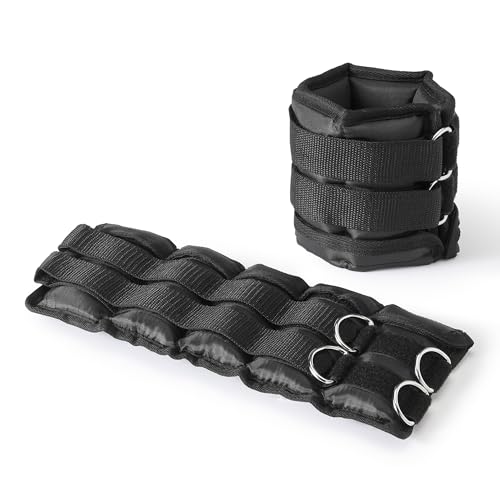
- Adjusts from 0.5 to 2.5 pounds per weight
- Dual hook-and-loop closure system
- Polyester exterior with reinforced stitching
Best For: Moderate resistance for jogging, workouts, and rehabilitation
Best Adjustable Pick
Adjustable 2–10 lb Ankle Weights
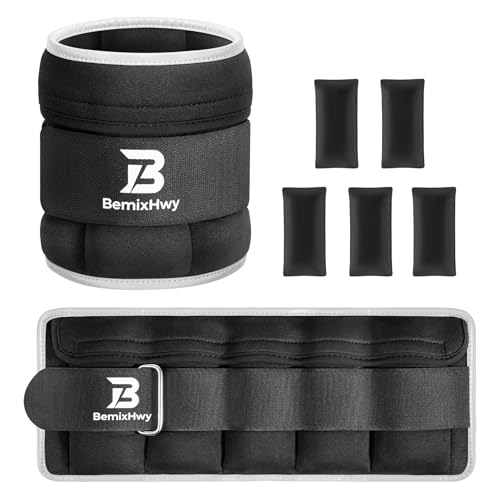
- Five removable 1-pound pouches per weight
- Reflective strips support low-light visibility
- Fits 7.5- to 12.5-inch ankle circumferences
Best For: Progressive training, walking, running, and supervised therapy
Best Low-Bulk Option
BAGAIL Ankle and Wrist Weights

- Slim Lycra-SBR fabric helps reduce bulk
- Available from 1/2 to 10 pounds
- Works as both ankle and wrist weights
Best For: Comfort-focused running, walking, Pilates, and cross-training
Best Weight-Range Value
Strap-On Ankle and Wrist Weights

- Weight choices span 2 to 40 pounds per pair
- Long straps support a customized fit
- Breathable, moisture-absorbing interior
Best For: Adjustable resistance for home, travel, gym, and therapy
Best Adjustable Range – Sportneer 2-10 lb Ankle Weights
For runners who want room to progress, these ankle weights for running adjust from 1 to 5 pounds per ankle. Removable iron-sand bags let you fine-tune resistance while the neoprene exterior and moisture-absorbing interior support a more comfortable fit.
Best For: Walkers, runners, and fitness users who want a broad adjustable range for strength training, Pilates, rehabilitation, or home workouts.
Pros:
- Adjusts from 1–5 pounds per ankle, or 2–10 pounds per pair.
- Soft neoprene construction with moisture-absorbing material inside.
- Long hook-and-loop straps and a metal D-ring help secure the fit.
Cons:
- Designed for ankle perimeters from 7.5 to 12.5 inches, so fit should be checked before purchase.
- The maximum pair weight may be more than some beginners need.
Its wide adjustment range makes this Sportneer pair a flexible choice if your training needs may change. Confirm the ankle measurement and begin with a manageable load, particularly for running.
Best Fixed-Weight Variety – AceSpear Ankle Weights
AceSpear offers ankle weights for running and general exercise in five pair-weight options, from 2×1 pound through 2×5 pounds. The soft neoprene fabric and adjustable closure are designed to provide a snug fit for walking, jogging, aerobics, and other workouts.
Best For: Beginners, families, and experienced users who prefer choosing a fixed pair weight for jogging, gym sessions, or leg exercises.
Pros:
- Available in five pair sizes from 2×1 to 2×5 pounds.
- Soft, elastic neoprene fabric is comfortable against the skin.
- Adjustable strap closure fits ankles, wrists, arms, or legs.
Cons:
- The supplied listing describes selectable sizes rather than removable weights within one pair.
- Weight selection is less granular than modular adjustable designs.
This is a straightforward option when you already know the resistance level you want. Choose the pair size carefully, especially if you plan to use the weights during jogging or other repetitive movement.
Best for Smaller Ankles – Sportneer 2-7 lb Ankle Weights
These Sportneer ankle weights for running offer adjustable resistance in a more compact range, from 1 to 3.5 pounds per ankle. Removable 0.6-pound sandbags, breathable neoprene, and extended straps make them suited to walking, jogging, home workouts, and therapy routines.
Best For: Users with smaller ankles or wrists who want adjustable resistance for beginner-to-advanced exercise, balance work, or rehabilitation.
Pros:
- Adjusts from 1–3.5 pounds per ankle, or 2–7 pounds per pair.
- Designed to fit ankle and wrist sizes from 7 to 11 inches.
- Soft, breathable neoprene and moisture-absorbing interior support longer sessions.
- Metal D-ring and extended hook-and-loop straps help reduce slipping.
Cons:
- The 7–11-inch fit range may not suit larger ankles.
- Its 3.5-pound-per-ankle maximum is lower than the heavier Sportneer model.
With smaller sizing and moderate adjustability, this pair is a practical starting point for controlled resistance. Measure your ankle or wrist first, then increase the load gradually.
Best Modular Design – APEXUP Adjustable Ankle Weights
APEXUP uses five removable 1-pound modules in each weight, giving these ankle weights for running a 1–5-pound-per-ankle range. Their compact iron-sand construction, breathable sleeve, and adjustable Velcro straps support running, walking, yoga, aerobics, and physical therapy.
Best For: Fitness users who want simple 1-pound adjustments and a compact pair for running, strength training, or rehabilitation.
Pros:
- Each ankle weight adjusts from 1 to 5 pounds in 1-pound increments.
- Iron-sand filling provides a compact profile.
- Soft, breathable material and adjustable Velcro straps support comfort and fit.
- Can also be used as arm weights.
Cons:
- The supplied details do not specify an ankle-size range.
- At 5 pounds per ankle, the full pair may be too demanding for some beginners.
The modular design makes load changes easy to understand and repeat. It is a versatile choice for users who want one pair that can move between running, home exercise, and therapy-oriented routines.
Flexible Resistance Pick – Multi-Weight Ankle Weights
If you want ankle weights for running that can also support walking, aerobics, home workouts, or physical therapy, this pair offers multiple fixed-weight options. Its adjustable hook-and-loop closure is designed for a secure fit around the ankle, wrist, arm, or leg.
Best For: Users who want to choose a fixed pair weight for strength training, running, rehabilitation, or general fitness.
Pros:
- Available in multiple pair-weight options from 1 to 20 pounds.
- Soft, stretchy mercerized cotton with moisture-absorbing material.
- Adjustable strap supports a customized, snug fit.
Cons:
- Weight is selected by pair rather than adjusted with removable inserts.
- The many color and weight combinations may require careful selection.
This is a versatile choice if you already know the resistance level you want and prefer a soft, adjustable wrap for varied workouts.
Progressive Training Pick – Removable-Weight Ankle Weights
These ankle weights for running are suited to progressive workouts because each pack contains removable 0.5-pound sandbags. The total pair weight can be adjusted from 1 to 5 pounds, while the long hook-and-loop strap helps keep the weights secure during jogging, walking, and exercise.
Best For: Beginners and experienced users who want to increase resistance gradually for jogging, strength training, aerobics, or physical therapy.
Pros:
- Five removable 0.5-pound inserts per pack allow incremental adjustment.
- Mercerized cotton and moisture-absorbing interior support comfortable wear.
- Suitable for jogging, running, walking, gym workouts, and rehabilitation.
- Lightweight design is convenient for studio, office, home, or travel use.
Cons:
- Adjustable range is limited to 1–5 pounds total per pair.
- Removing or adding inserts takes more setup than using fixed weights.
The removable-insert design makes this one of the more adaptable options for building resistance over time without buying several separate pairs.
Simple Adjustable Pick – Amazon Basics Ankle Weights
For shoppers seeking ankle weights for running with a straightforward adjustable design, this Amazon Basics set includes two 2.5-pound weights. Removable inserts let you adjust each weight from 0.5 to 2.5 pounds, while dual hook-and-loop closures are intended to keep them in place during walking, jogging, and dynamic exercises.
Best For: Users who want adjustable resistance for walking, jogging, home workouts, strength training, or rehabilitation.
Pros:
- Each 2.5-pound weight adjusts from 0.5 to 2.5 pounds.
- Dual Velcro closure helps secure the weights during movement.
- Polyester exterior and reinforced stitching support everyday use.
- Balanced weight distribution is designed for extended-wear comfort.
Cons:
- The set offers one maximum configuration: 5 pounds total.
- Its polyester construction may feel less soft than cotton-based alternatives.
This set is a practical option for users who want a familiar brand, adjustable inserts, and a moderate resistance range for running-related and general fitness routines.
Best Adjustable Pick – Adjustable 2–10 lb Ankle Weights
If you want ankle weights for running that can adapt as your training progresses, this pair offers five removable 1-pound pouches per weight. The adjustable design supports total pair loads of 2, 4, 6, 8, or 10 pounds, while reflective strips add visibility for low-light sessions.
Best For: Runners, walkers, and users who want adjustable resistance for fitness or supervised physical therapy.
Pros:
- Five removable pouches per weight allow gradual load changes.
- Long hook-and-loop straps and a D-ring help limit sliding.
- Soft neoprene construction includes moisture-wicking fabric and reflective strips.
- Fits ankle circumferences from 7.5 to 12.5 inches.
Cons:
- The listed 5-pound-per-weight size weighs more than lighter starter options.
- Heavier settings may not be suitable for every running routine.
Its modular design makes it more flexible than fixed-weight pairs, particularly for users who want to increase resistance gradually. Start conservatively for running and adjust the load as appropriate for your fitness level or therapy plan.
Best Low-Bulk Option – BAGAIL Ankle and Wrist Weights
For shoppers seeking ankle weights for running with a slimmer feel, the BAGAIL pair uses three-layer Lycra-SBR fabric and a non-bulky design. The pair is available in multiple weight tiers, from 1/2 to 10 pounds, and can also be used as wrist weights.
Best For: Runners and home exercisers who value a sleek, sweat-resistant fit and multi-use design.
Pros:
- Non-bulky Lycra-SBR fabric is designed to resist sweat and chafing.
- High-tension Velcro and a metal ring help secure the weights.
- Iron-sand filling is designed for consistent weight distribution.
- Can be used for ankle, wrist, walking, Pilates, and physical therapy workouts.
Cons:
- Hand-wash care is required.
- Buyers need to check the size chart and measure their ankle or wrist circumference.
This is a practical choice when comfort and versatility matter more than a modular weight system. Its low-profile construction may be appealing for shorter workouts, though proper sizing is important for a secure fit.
Best Weight-Range Value – Strap-On Ankle and Wrist Weights
These strap-on ankle weights for running are offered in a broad range of pair weights, from 2 to 40 pounds, with the supplied option listing 1 pound per weight. The iron-shot-filled pair uses a breathable, moisture-absorbing interior and adjustable straps for walking, running, workouts, or physical therapy.
Best For: Beginners and experienced users who want many weight choices for home, travel, gym, or rehabilitation routines.
Pros:
- Broad selection includes pair weights from 2 to 40 pounds.
- Long hook-and-loop straps allow a customized fit.
- Moisture-absorbing material is designed for breathable wear.
- Lightweight design is convenient for home or travel use.
Cons:
- The supplied configuration is only 1 pound per weight, so buyers must select carefully.
- Higher listed weight options may be excessive for running.
- The product details do not mention reflective visibility features.
The main advantage is choice: you can select a resistance level suited to your routine rather than being limited to one fixed size. Carefully verify whether the listing refers to each weight or the total pair before ordering.
How We Picked the Best Ankle Weights for Running
We focused on practical features that matter during movement: secure straps, balanced weight distribution, removable inserts, padding, and a useful range of resistance. Adjustable models received particular attention because runners often need less weight for faster sessions and more weight for walking, strength work, or rehabilitation.
We also considered versatility. Several selections can be used as wrist or leg weights, while others are better suited to controlled home workouts, physical therapy, or low-impact conditioning. Product weight listings can vary by pair versus individual unit, so confirm the seller’s specifications before ordering.
Quick Comparison
| Best For | What to Look For |
|---|---|
| Progressive training | Removable weights and a broad adjustment range |
| Short runs or walking | Light, compact cuffs with secure closures |
| Strength workouts | Higher-capacity pairs with durable straps |
| Physical therapy | Small increments, soft padding, and easy adjustment |
| Multi-use training | Designs suitable for ankles and wrists |
Key Buying Factors for Ankle Weights for Running
Weight and Adjustability
Start conservatively. Added weight increases the load on your ankles, knees, hips, and lower back, especially while jogging. Removable inserts or multiple size options let you fine-tune resistance instead of committing to a heavy fixed load.
Fit and Stability
Look for wide, adjustable straps that stay closed without cutting into your skin. The cuff should sit securely above the ankle bone and remain stable through walking or controlled drills. Excess movement can create hot spots and alter your natural gait.
Comfort and Construction
Breathable fabric, smooth edges, and adequate padding help reduce rubbing. Check the closure quality and stitching, particularly if you plan to use the weights frequently or for floor exercises.
Running Suitability
Ankle weights are generally better for walking, strength exercises, and short controlled drills than for regular distance running. If you use them while running, choose the lightest effective setting, keep sessions brief, and stop if your stride changes or discomfort develops.
Who Should Buy Which Ankle Weights for Running?
Choose adjustable 2–10-pound designs if you want one pair for gradual progression, walking, home workouts, and occasional resistance drills. Choose lighter sets for rehabilitation, beginners, or exercises requiring precise control. Choose higher-capacity options for strength-focused sessions, but avoid assuming the maximum rating is appropriate for running.
Choose wrist-and-ankle models if versatility matters and you want to use the weights for upper- and lower-body movements. For frequent jogging, prioritize the most secure and least bulky option, and treat ankle weights as an occasional training accessory rather than a replacement for conventional running workouts.