The best lightweight fitness trackers make it easier to monitor daily movement, workouts, sleep, and heart rate without the bulk of a smartwatch. The right model should feel comfortable around the clock while delivering the features and battery life that match your routine.
We compared 10 popular options across Fitbit, Garmin, Amazfit, Xiaomi, MorePro, and budget-focused brands to help you find a practical tracker for everyday wellness and fitness goals.
Best 10 Lightweight Fitness Trackers Picks for 2026
Screen-Free Recovery Focus

- Tracks recovery, fatigue, sleep, and stress
- Supports strength and HYROX training
- Up to 10 days of battery life
Best For: Screen-free training and recovery analysis
Everyday Wellness Companion

- Tracks activity, stress, sleep, and heart rate
- Includes 40-plus exercise modes
- Up to 10 days of battery life
Best For: Broad everyday wellness and sleep tracking
Long-Battery Display Band

- Up to 21 days in light-use mode
- 1.47-inch 60Hz display and 50 workout modes
- 5ATM water resistance for swimming
Best For: Long-lasting activity and workout tracking
Best All-Around Pick

- 24.5-gram design with touchscreen and button controls
- Up to 7 days of battery life
- Tracks health metrics, workouts, and connected GPS activities
Best For: Everyday health tracking and versatile fitness use
Best Battery Life

- Up to 21 days of battery life
- Large 1.72-inch AMOLED display
- 50-meter water resistance and multi-sport tracking
Best For: Long-wearing fitness and swimming-focused tracking
Best Stylish Option
Fitbit Luxe Fitness and Wellness Tracker
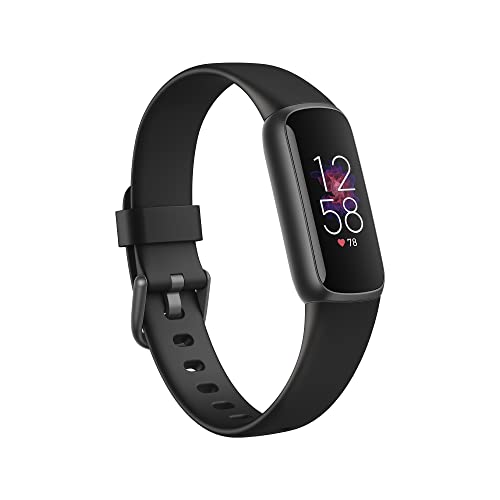
- Slim 27.22-gram accessory-style design
- 24/7 heart-rate and sleep tracking
- Includes small and large bands
Best For: Discreet wellness tracking with a jewelry-inspired look
Best Style-Friendly Pick
MorePro Health Fitness Tracker

- Slim 1.47-inch display with 300+ watch faces
- Tracks activity, sleep, heart rate, and blood oxygen
- Up to 7 days of use with IP68 water resistance
Best For: Style-conscious users wanting wellness tools and notifications
Best Lightweight AMOLED Value

- Lightweight 25 g build with a 1.1-inch AMOLED screen
- Tracks activity, sleep, heart rate, and blood oxygen
- Up to 7 days of regular use or 15 days standby
Best For: Users wanting a compact tracker for everyday wellness
Best for Workout Variety

- Offers 25 sports modes and connected GPS
- 1.1-inch AMOLED touch color screen
- IP68 water resistance and up to 7 days of battery life
Best For: Active users tracking multiple workout types
Balanced Heart-Rate Tracking – Fitbit Inspire HR
The Fitbit Inspire HR is a practical choice among lightweight fitness trackers for everyday activity, sleep, and heart-rate monitoring. It tracks steps, distance, active minutes, calories, sleep stages, and workouts, while connected phone GPS can provide pace, distance, and route mapping.
Best For: Daily wellness tracking and users who want heart-rate insights in a slim, water-resistant band.
Pros:
- 24/7 heart-rate tracking supports calorie-burn, resting-heart-rate, and heart-zone insights.
- Automatically tracks sleep, including light, deep, and REM stages.
- Water resistant to 50 meters and includes automatic workout recognition for activities such as walking, swimming, and cycling.
- Offers up to five days of battery life and works with compatible iOS, Android, and Windows 10 devices.
Cons:
- Uses a phone’s GPS rather than built-in GPS.
- Battery life is shorter than several newer fitness bands in this roundup.
The Inspire HR is a straightforward, established option for tracking core health and activity metrics without adding smartwatch-style complexity. Its strongest appeal is the combination of continuous heart-rate data, sleep insights, and broad device compatibility.
Screen-Free Recovery Focus – Amazfit Helio Strap
The Amazfit Helio Strap takes a screenless approach to lightweight fitness trackers, emphasizing training, recovery, sleep, and continuous health data through the Zepp App. Its nylon band weighs 18.14 grams and provides up to 10 days of battery life.
Best For: Strength trainees, HYROX participants, and athletes who prefer detailed recovery insights without a display.
Pros:
- Tracks heart rate, blood oxygen, stress, sleep, fatigue, and recovery around the clock.
- Designed for strength and HYROX training, with rep, set, and rest-period tracking.
- Provides 27 sports modes and post-workout metrics such as VO2 max, training load, training effect, and recovery time.
- Offers up to 10 days of battery life and 50-meter water resistance.
Cons:
- Has no built-in GPS.
- The screenless design requires the Zepp App for viewing and analyzing data.
- Some advanced data features depend on using the Zepp ecosystem and compatible integrations.
For users focused on training readiness rather than on-wrist notifications or a display, the Helio Strap is the most recovery-oriented option here. It is especially compelling for structured gym training, though shoppers wanting standalone route tracking should look elsewhere.
Everyday Wellness Companion – Fitbit Inspire 3
The Fitbit Inspire 3 is one of the more versatile lightweight fitness trackers for everyday wellness. It combines activity and heart-rate monitoring with stress tools, sleep scoring, exercise tracking, and smartphone-connected GPS, while its battery lasts up to 10 days.
Best For: Users seeking a compact tracker with broad wellness features, sleep guidance, and exercise support.
Pros:
- Includes Daily Readiness Score, Active Zone Minutes, all-day activity tracking, and 40-plus exercise modes.
- Tracks stress, sleep, heart rate, blood oxygen, menstrual health, and irregular heart rhythm notifications.
- Offers automatic exercise tracking, smart wake alarms, mindfulness sessions, and relax breathing sessions.
- Provides up to 10 days of battery life and water resistance to 50 meters.
Cons:
- GPS is provided through a connected smartphone rather than built into the tracker.
- Compatibility requires iOS 16.4 or higher or Android 11.0 or higher.
The Inspire 3 stands out as a well-rounded choice for people who want more than step counting but do not need a full smartwatch. Its combination of sleep, stress, exercise, and readiness features makes it a strong general-purpose wellness tracker.
Long-Battery Display Band – Xiaomi Smart Band 11 Active
The Xiaomi Smart Band 11 Active is a lightweight fitness tracker for shoppers who want a larger color display, extensive workout coverage, and long battery life. It weighs 18 grams without the strap, offers 50 workout modes, and is rated 5ATM for swimming and other shallow-water activities.
Best For: Active users who prioritize long battery life, an easy-to-read display, and broad workout-mode support.
Pros:
- Provides up to 21 days in light-use mode or up to eight days in daily-use mode.
- Includes a 1.47-inch 60Hz display, 100-plus watch faces, and a lightweight 18-gram body.
- Supports 50 workout modes and 5ATM water resistance for swimming and shallow-water workouts.
- Tracks heart rate, blood oxygen, sleep, sleep breathing quality, stress, and women’s health metrics.
Cons:
- GPS is available through a smartphone rather than built into the band.
- Its 5ATM rating is not intended for hot showers, saunas, or diving.
- Requires the Mi Fitness app and compatible Android or iOS devices.
The Smart Band 11 Active is a strong fit for buyers who dislike frequent charging and want useful information visible on the band itself. Its extensive workout selection and swimming-friendly design add versatility, while phone-connected GPS keeps the device compact and lightweight.
Best All-Around Pick – Garmin vívosmart 5
The Garmin vívosmart 5 is a comfortable, lightweight fitness tracker for everyday health monitoring and structured workouts. It combines a brighter display, touchscreen and button controls, up to seven days of battery life, and smartphone-connected GPS for outdoor activities.
Best For: Everyday users who want broad health metrics, fitness tracking, and smart notifications in a lightweight design.
Pros:
- Lightweight 24.5-gram design with a larger, brighter display than the vívosmart 4.
- Tracks heart rate, sleep, stress, respiration, Pulse Ox, Body Battery, steps, calories, and intensity minutes.
- Offers up to seven days of battery life and is suitable for swimming and showering.
- Includes sports apps, smartphone notifications, and connected GPS for walks, runs, and rides.
Cons:
- GPS requires connection to a compatible smartphone.
- Some features, including alerts and assistance functions, require setup in Garmin Connect and a connected phone.
The vívosmart 5 is a well-rounded choice among lightweight fitness trackers, especially if you value detailed wellness insights and a longer battery interval without giving up basic smart features.
Best Battery Life – Xiaomi Smart Band 10
The Xiaomi Smart Band 10 stands out among lightweight fitness trackers for its large 1.72-inch AMOLED display and claimed 21-day battery life. It supports multi-sport tracking, sleep monitoring, heart-rate and blood-oxygen measurements, and water resistance to 50 meters.
Best For: Users who prioritize long battery life, a bright screen, and swimming or multi-sport features.
Pros:
- Large AMOLED display with 1500 nits high-brightness mode for improved visibility in bright light.
- Offers up to 21 days of battery life, with fast charging that takes about an hour.
- Tracks sleep, heart rate, blood oxygen, steps, and multiple sports, including swimming.
- 50-meter water resistance and an electronic compass support pool and training activities.
Cons:
- It does not include built-in GPS.
- The Xiaomi Fit app supports the metric system directly; imperial measurements may require a third-party connection through Google Fit.
Choose the Smart Band 10 if frequent charging is your main frustration. Its display and battery endurance are compelling, but the lack of onboard GPS makes it less suitable for phone-free route tracking.
Best Stylish Option – Fitbit Luxe Fitness and Wellness Tracker
The renewed Fitbit Luxe is a slim, lightweight fitness tracker designed to blend into everyday outfits while covering core wellness features. It provides 24/7 heart-rate tracking, sleep scoring, stress-management tools, and target heart-rate zone alerts in a compact accessory-style design.
Best For: Shoppers who want discreet wellness tracking with a more jewelry-inspired appearance.
Pros:
- Lightweight 27.22-gram design with a stainless-steel case and vibrant color display.
- Includes both small and large bands for a more flexible fit.
- Tracks heart rate continuously and supports sleep tracking, sleep scores, and active zone minutes.
- Water resistant to 50 meters and includes a six-month Fitbit Premium trial for eligible new or returning members.
Cons:
- As a renewed product, it comes with a 90-day limited warranty.
- Its battery is rated for up to five days, shorter than the other options here.
- The listing identifies GPS functionality, but the supplied notes do not clarify whether GPS is built in or phone-connected.
The Fitbit Luxe is a strong style-first alternative among lightweight fitness trackers. It suits casual wellness monitoring particularly well, though its shorter battery life and renewed condition are worth considering before purchase.
Best Style-Friendly Pick – MorePro Health Fitness Tracker
For shoppers seeking lightweight fitness trackers that can transition from workouts to everyday wear, the MorePro Health Fitness Tracker combines a slim 1.47-inch display with activity, sleep, and wellness features. It tracks steps, distance, calories, and sleep while adding notifications and practical daily reminders.
Best For: Users who want a slim, customizable tracker with women’s health tools and broad everyday features.
Pros:
- Slim design with 300+ watch faces and custom dial support.
- Tracks heart rate, blood oxygen, sleep, steps, distance, and calories.
- Includes seven sports modes, IP68 water resistance, and up to seven days of use.
- Supports call, text, email, and app notifications.
Cons:
- Blood pressure and other wellness readings are for general reference, not medical use.
- Requires Android 7.0 or iOS 13.0 and above; it is not compatible with tablets or PCs.
This is a versatile choice if appearance, notifications, and women’s health tracking matter as much as basic fitness metrics. Its seven-day battery claim is useful for reducing charging interruptions, though actual runtime varies with settings and usage.
Best Lightweight AMOLED Value – C60 Fitness Tracker
The C60 is a practical option among lightweight fitness trackers, weighing 25 g and using a compact 1.1-inch AMOLED touch screen. It covers core activity tracking, sleep monitoring, heart rate and blood oxygen measurements, plus message notifications and habit reminders.
Best For: Shoppers who prioritize a light, compact tracker with an AMOLED display and straightforward health tracking.
Pros:
- Light 25 g design with a curved 1.1-inch color AMOLED screen.
- Tracks steps, distance, calories, sleep stages, heart rate, and blood oxygen.
- Offers more than 70 cloud watch faces and custom photo dials.
- Provides up to seven days of regular use or 15 days on standby.
Cons:
- The supplied notes do not specify an IP rating or sport-mode count.
- Requires the Keep Health app and an initial charging and Bluetooth setup process.
With its low listed weight and AMOLED screen, the C60 makes a sensible everyday companion for users who want essential tracking without a bulky design. Its feature set is strongest for general wellness, notifications, and daily activity rather than advanced workout analysis.
Best for Workout Variety – 25-Sport Fitness Tracker
For active users comparing lightweight fitness trackers, this model stands out with 25 sports modes and connected GPS support for recording workout routes. Its 1.1-inch AMOLED screen, sleep tracking, activity metrics, and IP68 water resistance make it suited to varied daily routines.
Best For: People who want more workout-mode coverage alongside everyday activity, sleep, and notification features.
Pros:
- Includes 25 sports modes for tracking varied activities.
- Uses a 1.1-inch AMOLED touch color screen.
- Tracks steps, calories, distance, heart rate, sleep, and workout time.
- Offers IP68 water resistance, connected GPS, and up to seven days of battery life.
Cons:
- Connected GPS requires a paired smartphone for route recording.
- Health and sleep data should be treated as reference information and not medical advice.
- The supplied notes do not list the device’s weight.
This tracker is a strong fit for buyers who want broader exercise coverage than a basic step counter provides. The combination of 25 modes and connected GPS adds useful workout context, while reminders, notifications, and female health tracking support everyday use.
How We Picked the Best Lightweight Fitness Trackers
We evaluated these Lightweight Fitness Trackers based on comfort, tracking features, battery expectations, water resistance, display design, app compatibility, and overall usefulness for everyday wear. We also considered whether each device is better suited to casual activity tracking, structured workouts, sleep monitoring, or smartwatch-style notifications.
Specifications can vary by size, region, software version, and wearing habits. Treat wellness measurements as general insights rather than medical diagnoses, especially for blood oxygen, blood pressure, stress, and heart-rate data.
Quick Comparison
| Best For | Look For |
|---|---|
| Everyday activity and sleep | Comfortable band, reliable step and sleep tracking, simple app |
| Long battery life | Large battery capacity, efficient display, or screenless design |
| Workout tracking | Multiple sport modes, heart-rate monitoring, and water resistance |
| Smart features | Bright display, notifications, alarms, and phone compatibility |
| Discreet wear | Compact body, lightweight construction, and a low-profile band |
Key Buying Factors for Lightweight Fitness Trackers
Comfort and Fit
Look for an adjustable band and a case that sits securely without pinching. A slim tracker is especially valuable if you wear it overnight or dislike the weight of a traditional smartwatch. Check included band sizes before ordering.
Battery Life and Charging
Battery claims are usually based on moderate use. Frequent workouts, continuous heart-rate readings, bright screens, and notifications can reduce runtime. Choose a screenless or long-lasting model if minimizing charging is your priority.
Tracking Accuracy and Features
Most models cover steps, distance, calories, heart rate, sleep, and workout modes. Advanced metrics may require a subscription, compatible phone, or specific settings. If you need GPS, verify whether the tracker has built-in GPS or relies on your phone.
Display, Controls, and App Support
A color AMOLED display makes stats and notifications easier to read, while a screenless tracker can be lighter and less distracting. Confirm iOS or Android compatibility and review the companion app before buying, since the app is where most data and trends are presented.
Water Resistance
For swimming, choose a model with a clearly stated swimming or 5ATM rating. Water resistance does not necessarily protect against every activity, temperature, or chemical exposure, so follow the manufacturer’s limits.
Who Should Buy Which Lightweight Fitness Trackers?
Choose a Fitbit Inspire or Luxe if you want a compact wellness tracker with an established app ecosystem and straightforward daily insights. The Fitbit Inspire 3 is a strong all-around option for users prioritizing sleep, activity, and heart-rate tracking in a slim design.
Garmin’s vívosmart 5 is worth considering if you prefer Garmin’s broader fitness ecosystem and want health and activity features that can complement other Garmin devices. Amazfit’s Helio Strap is a good fit for people who prefer a screenless, low-distraction design and extended battery life.
Xiaomi’s Smart Band models suit buyers who want a bright display, many activity features, and long battery claims at a typically accessible price. MorePro and similar budget trackers may appeal to casual users who want basic metrics and a color screen, but check app quality, support, and measurement limitations carefully.