Snowy trails demand more than ordinary running shoes. You need dependable traction, weather protection, and a fit that remains comfortable when conditions turn cold, wet, and uneven.
These 10 picks cover waterproof trail runners and versatile hiking-oriented designs for winter training, packed snow, slush, and mixed mountain terrain.
Best 10 Trail Running Shoes for Snow Picks for 2026
Rugged Stability Pick

- Waterproof Gore-Tex protection
- Stable 3D Advanced Chassis
- Grippy Contagrip outsole
Best For: Demanding wet trails and mixed terrain
Everyday Cushion Pick

- Waterproof trail construction
- VersaRun foam cushioning
- 4mm-lug carbon rubber outsole
Best For: Comfortable wet-weather trail use
Quick-Lace Traction Pick
Salomon Speedcross Peak Gore-Tex

- Sealed waterproof Gore-Tex bootie
- All-terrain Contagrip grip
- Quicklace secure fit system
Best For: Wet, muddy, and mixed-surface trails
Light Cushioning Pick
adidas Terrex Anylander Rain.RDY

- Rain.RDY wet-weather membrane
- EVA midsole cushioning
- Multidirectional Traxion lugs
Best For: Wet-weather hiking and light snow
Best Winter Technical Pick

- Waterproof, breathable winter construction
- Compatible with traction devices
- Lightweight 290 g design
Best For: Technical winter mountain trails
Best Trail-to-Street Value

- Maximum Omni-Max cushioning
- Omni-Grip multi-terrain traction
- Breathable upper with supportive overlays
Best For: Cushioned dry trail and outdoor use
Deep-Traction Mud Pick
Salomon Speedcross Trail Running Shoes
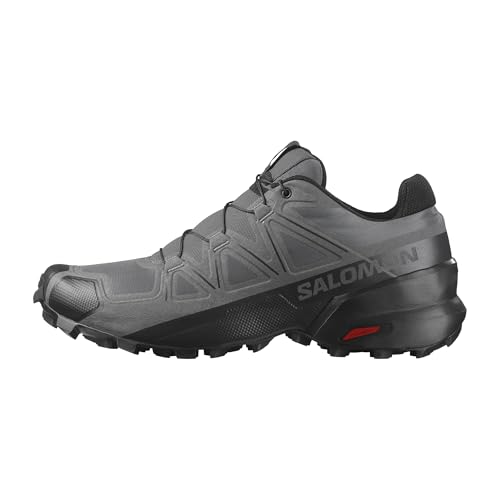
- Aggressive lugs grip soft, muddy, and loose terrain
- Protective ripstop upper helps block trail debris
- Quicklace and Sensifit create a secure fit
Best For: Runners prioritizing traction on mixed and muddy trails
Balanced Mountain Pick
Brooks Cascadia 19 Trail Running Shoe

- TrailTack Green outsole handles wet and dry terrain
- DNA LOFT v3 cushioning supports a soft, responsive ride
- Rock shield and mudguard add protection on rugged trails
Best For: Runners wanting cushioned stability on varied mountain trails
Wide-Toe Comfort Pick
ALTRA Lone Peak 8 Trail Running Shoe

- Wide toe box and zero-drop platform encourage natural movement
- MaxTrac outsole and TrailClaw lugs provide trail traction
- Water-resistant ripstop design suits varied outdoor use
Best For: Runners preferring roomy, natural-feeling trail shoes
Rugged Stability Pick – Salomon XA PRO 3D Gore-Tex
Salomon Men’s XA PRO 3D Gore-Tex Waterproof Trail Running Shoes - Lead/Black/Barbados Cherry - 12
Check Price On AmazonFor trail running shoes for snow, the Salomon XA PRO 3D Gore-Tex is a strong choice when waterproof protection, underfoot stability, and rugged traction matter most. Its Gore-Tex membrane helps block water and wind, while the low-profile 3D Advanced Chassis supports controlled movement on challenging terrain.
Best For: Demanding trails, mixed terrain, and wet fall conditions where stability and maximum cushioning are priorities.
Pros:
- Waterproof, windproof, and breathable Gore-Tex membrane
- 3D Advanced Chassis provides motion control and underfoot protection
- Contagrip rubber outsole offers traction on firm ground and loose gravel
- Reinforced toe cap helps protect against trail impacts
Cons:
- Low-top design provides less coverage than a boot
- Designed for firm ground, so it may not be ideal for deep snow
This is a practical all-weather trail shoe for runners and hikers who want a secure, cushioned platform. Its waterproof build can handle wet snow and slushy paths, but the low profile is better suited to packed or shallow snow than deep winter conditions.
Everyday Cushion Pick – Saucony Excursion TR18 GTX
The Saucony Excursion TR18 GTX is a practical option among trail running shoes for snow when you want waterproof coverage and comfortable all-day wear. Its VersaRun foam cushioning pairs with a carbon rubber outsole and 4mm lugs for a balanced trail setup.
Best For: Everyday trail use, light hiking, and wet-weather outings that call for cushioning and dependable traction.
Pros:
- Waterproof lining helps protect feet in wet conditions
- VersaRun foam provides step-in comfort and cushioning
- XT-600 carbon rubber outsole with 4mm lugs delivers grippy traction
- Mesh upper includes reinforced heel and toe protection
Cons:
- Low-top construction offers limited snow coverage
- 4mm lugs may be less specialized for deep or highly packed snow
With maximum cushioning and a true-to-size fit, this Saucony model is suited to comfortable trail miles rather than extreme winter specialization. It makes the most sense for damp paths, light snow, and general outdoor use.
Quick-Lace Traction Pick – Salomon Speedcross Peak Gore-Tex
For trail running shoes for snow in unpredictable weather, the Salomon Speedcross Peak Gore-Tex emphasizes waterproof coverage, secure fit, and versatile grip. Its sealed Gore-Tex bootie, protective mudguard, and All Terrain Contagrip outsole are built for wet and rugged paths.
Best For: Wet trails, puddles, muddy routes, and moderate hikes where quick adjustments and all-terrain traction are useful.
Pros:
- Waterproof Gore-Tex bootie helps keep feet dry
- All Terrain Contagrip outsole grips wet, dry, loose, and hard surfaces
- Quicklace system enables fast tightening and easy removal
- Sensifit construction provides a foot-hugging fit
Cons:
- Moderate cushioning may feel less plush for long-distance use
- Medium-neck, low shoe design is not intended for deep snow
This shoe stands out for wet-weather versatility and convenient lacing rather than maximum cushioning. It is a good fit for packed snow, slush, and muddy trails where a secure fit and adaptable outsole are more important than winter boot coverage.
Light Cushioning Pick – adidas Terrex Anylander Rain.RDY
adidas Men's Terrex Anylander Rain.RDY Hiking, Shadow Olive/Tent Green/Halo Green, 8.5
Check Price On AmazonThe adidas Terrex Anylander Rain.RDY is a lightweight-leaning hiking shoe to consider among trail running shoes for snow when your routes involve wet conditions and rugged terrain. Its Rain.RDY membrane, EVA midsole, and directional Traxion lugs focus on weather coverage, cushioning, and grip.
Best For: Wet-weather hiking, casual outdoor use, and light snow on maintained or rugged trails.
Pros:
- Rain.RDY membrane is designed to keep feet dry in wet conditions
- EVA midsole provides step-absorbing, durable comfort
- Traxion outsole uses multidirectional lugs for rugged-terrain grip
- Made partly with recycled and renewable materials
Cons:
- Supplied details list the shoe as hiking-focused rather than trail-running-specific
- Low-top profile offers limited protection in deep snow
- Water-resistance information is inconsistent in the supplied specifications
This adidas model is best viewed as a versatile wet-weather hiking shoe rather than a dedicated snow runner. Its 10 mm drop, EVA cushioning, and Traxion outsole make it suitable for light snow and wet trails, while deeper snow may call for more coverage.
Best Winter Technical Pick – Norvan 4 Nivalis GTX
For trail running shoes for snow, the Arc’teryx Norvan 4 Nivalis GTX stands out as a winter-ready option for technical mountain terrain. Its waterproof construction, breathable design, durable build, and traction-device compatibility make it suited to cold, variable conditions.
Best For: Winter trail runners and hikers tackling technical mountain routes.
Pros:
- Waterproof and breathable for fall and winter use.
- Designed for technical mountain activities and trail running.
- Traction-device compatible for added winter versatility.
- Moderate EVA cushioning and a lightweight 290 g build.
Cons:
- Its technical winter focus may be more than needed for casual trails.
- Moderate cushioning may not suit runners seeking maximum underfoot padding.
The Norvan 4 Nivalis GTX is the most purpose-built choice here for snowy, challenging terrain, especially when waterproofing and compatibility with traction devices matter.
Best Lightweight Trail Comfort – Terrex Soulstride Rain.RDY
The adidas Terrex Soulstride is a comfortable trail option for shoppers comparing trail running shoes for snow, but its lack of water resistance makes it better suited to dry, lightly snowy routes. A breathable mesh upper, EVA cushioning, and multidirectional Traxion grip support everyday trail use.
Best For: Casual trail runners who prioritize cushioning and grip in dry conditions.
Pros:
- Breathable mesh upper helps keep the shoe light.
- EVA midsole provides step-absorbing cushioning.
- Traxion outsole is designed for grip on rugged terrain.
- Made in part with recycled materials.
Cons:
- Not water resistant, so it is less suitable for wet snow or slush.
- Its all-season design is less winter-specific than dedicated snow footwear.
Choose the Soulstride for comfortable, general trail running when conditions are mostly dry; for wet snow, a waterproof model is a safer fit.
Best Trail-to-Street Value – Columbia Vertisol Trail
The Columbia Vertisol Trail is a versatile trail-to-street shoe for shoppers considering trail running shoes for snow, though its non-water-resistant design is better for dry conditions. It combines maximum cushioning with Omni-Grip traction and a supportive mesh-and-overlay upper.
Best For: Trail and outdoor users who want cushioned, multi-terrain footwear for dry routes.
Pros:
- Omni-Max cushioning system supports comfort and flexibility.
- Omni-Grip outsole is designed for rock, dirt, gravel, and wet/dry conditions.
- Breathable mesh upper includes supportive overlays.
- Durable, abrasion-resistant construction for regular outdoor use.
Cons:
- Not water resistant, limiting its suitability for wet snow.
- Primarily listed as a hiking shoe rather than a dedicated winter running shoe.
The Vertisol Trail makes sense when cushioning and broad trail versatility matter more than waterproofing or specialized snow performance.
Deep-Traction Mud Pick – Salomon Speedcross Trail Running Shoes
If you need trail running shoes for snow and frequently encounter soft, muddy, loose, or rugged ground, the Salomon Speedcross is built around confident traction. Its deep lugs, protective upper, and secure Quicklace fit make it a practical choice for demanding trail conditions, though it is not rated as water resistant.
Best For: Runners tackling mixed, muddy, loose, and rugged trails who prioritize aggressive grip and a locked-in fit.
Pros:
- Deep, sharp Mud Contagrip lugs provide strong traction on soft, loose, rocky, and muddy terrain.
- Welded, abrasion-resistant ripstop construction helps keep out debris and mud.
- Sensifit construction and Quicklace closure provide a precise, foot-hugging fit.
- Heel support helps promote stability during the stride.
Cons:
- Not water resistant, so wet snow and slush may reach the foot.
- Designed for aggressive terrain, which may feel more specialized than an everyday trail shoe.
The Speedcross stands out when traction is the deciding factor. For snowy trails that are also muddy or loose, its lug pattern is a strong advantage; pair it with suitable socks or gaiters when moisture protection is important.
Balanced Mountain Pick – Brooks Cascadia 19 Trail Running Shoe
Brooks Men’s Cascadia 19 Mountain Trail Running Shoe - Black/Black/Ebony - 10 Medium
Check Price On AmazonThe Brooks Cascadia 19 is a versatile option among trail running shoes for snow, especially for runners who want cushioning and stability across changing mountain conditions. Its TrailTack Green outsole is designed for wet and dry traction, while the protective upper helps handle debris and rough terrain.
Best For: Trail runners seeking a cushioned, stable shoe for varied mountain trails and uneven conditions.
Pros:
- TrailTack Green rubber outsole supports traction in uneven wet and dry conditions.
- DNA LOFT v3 cushioning delivers a soft, responsive ride in the heel and forefoot.
- Trail Adapt System and articulated Ballistic Rock Shield add stability and adaptability.
- Reinforced toe cap, mudguard, and durable quick-drying mesh improve trail protection.
Cons:
- Not water resistant, so it is not a waterproof snow shoe.
- Its moderate-to-high cushioning may feel less direct than a lower-cushion trail design.
The Cascadia 19 is a well-rounded choice when snow is only one part of the route. It combines wet-and-dry outsole traction with cushioning and rock protection, making it suitable for runners who value comfort over long, varied outings.
Wide-Toe Comfort Pick – ALTRA Lone Peak 8 Trail Running Shoe
For trail running shoes for snow that emphasize natural foot positioning and all-day comfort, the ALTRA Lone Peak 8 offers a distinctive design. Its MaxTrac outsole and TrailClaw lugs provide trail traction, while the zero-drop platform and wide toe box give the foot room to spread and move naturally.
Best For: Runners who prefer a wide toe box, zero-drop platform, and versatile traction for dirt, gravel, rock, and outdoor use.
Pros:
- MaxTrac outsole and TrailClaw lugs provide traction on dirt, gravel, and rock.
- Wide toe box and balanced zero-drop platform support a natural stride.
- Ripstop mesh is breathable, abrasion-resistant, and built for trail conditions.
- EGO midsole offers responsive cushioning and high-rebound energy return.
Cons:
- Moderate cushioning and a 25mm stack may offer less plushness than higher-cushion models.
- Zero-drop geometry may require adjustment for runners accustomed to traditional heel-to-toe offsets.
The Lone Peak 8 is a strong fit for runners who value foot room and a natural platform. Its notes list water resistance, but it remains a low-top trail shoe rather than a dedicated snow boot, so deeper or especially wet snow may require additional protection.
How We Picked the Best Trail Running Shoes for Snow
We focused on the features that matter most in winter conditions: outsole grip, water resistance, upper durability, underfoot protection, stability, and overall versatility. The lineup includes shoes with waterproof membranes such as GORE-TEX or Rain.RDY, as well as lighter trail models for dry, packed snow. We also considered different foot shapes and running styles, since a secure performance fit is not ideal for every winter outing.
Keep in mind that no shoe replaces traction devices on glare ice. For steep, icy routes, pair compatible footwear with removable microspikes or choose a model designed specifically for extreme conditions.
Quick Comparison
- Best all-around protection: Salomon XA PRO 3D GORE-TEX
- Best for aggressive traction: Salomon Speedcross Peak GORE-TEX
- Best value-oriented option: Saucony Excursion TR18 GTX
- Best for wide, natural foot comfort: ALTRA Lone Peak 8
- Best for technical winter terrain: Arc’teryx Norvan 4 Nivalis GTX
- Best versatile hiking-trail option: adidas Terrex Anylander Rain.RDY
Key Buying Factors for Trail Running Shoes for Snow
Traction and Outsole Design
Look for deep, multidirectional lugs that can bite into packed snow, loose dirt, and slush. Aggressive lugs are helpful on soft or uneven surfaces, while moderate lugs may feel smoother on paved sections and hard-packed paths. Rubber compounds also affect grip in cold temperatures, but even the best outsole can slide on polished ice.
Waterproofing and Snow Protection
A waterproof membrane helps keep out melting snow and puddles, especially when paired with a gusseted tongue and a close-fitting collar. Waterproof shoes can run warmer and less breathable, so they are usually best for wet snow and cold weather rather than mild, dry conditions. Low gaiters can prevent snow from entering over the ankle.
Fit, Insulation, and Socks
Leave enough room to move your toes and wear winter-weight socks without compressing circulation. A snug heel and midfoot reduce slipping, but an overly tight fit can make feet colder. Most trail runners are not heavily insulated, so pair them with merino or synthetic socks when temperatures drop.
Protection and Stability
A protective toe cap, firm midsole, and stable platform are valuable on frozen ruts and rocky trails. Choose a more supportive shoe for carrying a pack or navigating uneven mountain routes. Lighter, more flexible models are better for fast outings on maintained trails.
Who Should Buy Which Trail Running Shoes for Snow?
Choose a waterproof Salomon, Saucony, or adidas model if you regularly encounter wet snow, slush, and mixed surfaces. The Arc’teryx option suits runners prioritizing technical performance and mountain-ready protection. The Columbia and Brooks models are practical choices for everyday trail use with added durability and stability.
For runners who prefer a roomier toe box and a more natural stride, the ALTRA Lone Peak 8 is worth considering, particularly on less saturated trails where maximum waterproofing is not essential. The Salomon Speedcross models are better suited to soft, loose, or steep terrain where aggressive traction matters most. Before buying, confirm sizing, check whether your routes require ice traction, and select the shoe that matches your typical snow depth, pace, and surface conditions.