The best compression socks for running can improve lower-leg support, manage moisture, and make long training sessions or race days more comfortable. The right pair depends on compression level, coverage, cushioning, and fit.
We selected 10 options ranging from technical tall socks and calf sleeves to affordable multipacks, so you can match your choice to your mileage, climate, and recovery routine.
Best 10 Compression Socks for Running Picks for 2026
Performance Pick
CEP Core Run 5.0 Tall Compression Socks

- Firm 20–30 mmHg targeted compression
- Breathable, quick-drying fabric
- Cushioned fit with smooth toe seam
Best For: Firm-support training and recovery
Multipack Value
Compression Running Socks 3-Pair Cushion Crew

- Three-pair running sock rotation
- Moderate 15–20 mmHg compression
- CoolMax fabric with cushioned zones
Best For: Frequent training and multi-sport use
Calf-Sleeve Choice
Rymora Calf Compression Sleeves
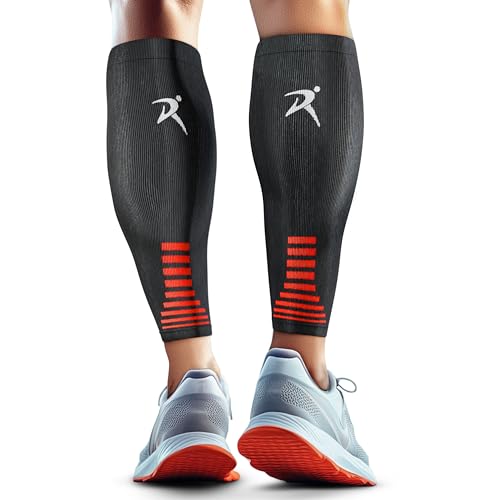
- Foot-free calf compression design
- Breathable moisture-wicking stretch blend
- Useful for running and recovery
Best For: Custom sock pairing and calf support
Low-Cut Multipack
PAPLUS Ankle Compression Running Socks

- Six-pair ankle-length pack
- Light 8–15 mmHg arch compression
- Cushioned, breathable mesh design
Best For: Light support and everyday running
Best Overall Support
Physix Gear 20-30 mmHg Running Socks

- Firm 20-30 mmHg compression
- Durable nylon-spandex construction
- Useful for running, travel, and long shifts
Best For: Runners wanting firmer, versatile compression
Best Value Multipack
FuelMeFoot Copper Compression Socks
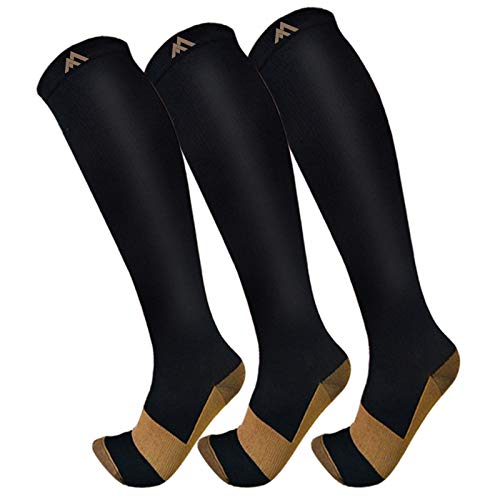
- Includes three pairs
- Ventilated nylon with quick-drying care
- Designed for running and everyday use
Best For: Runners who want multiple pairs for rotation
Best Lightweight Design

- Moderate graduated compression
- Moisture-wicking mesh ventilation
- Cushioning and 3D heel support
Best For: Runners wanting breathable moderate support
Best Low-Cut Pick
Ankle Compression Socks with Arch Support

- 15–20 mmHg compression for exercise and daily wear
- No-show ankle design with arch support
- Breathable nylon-spandex fabric; six-pair pack
Best For: Runners who prefer low-cut athletic socks
Best Knee-High Value
20–30 mmHg Compression Running Socks
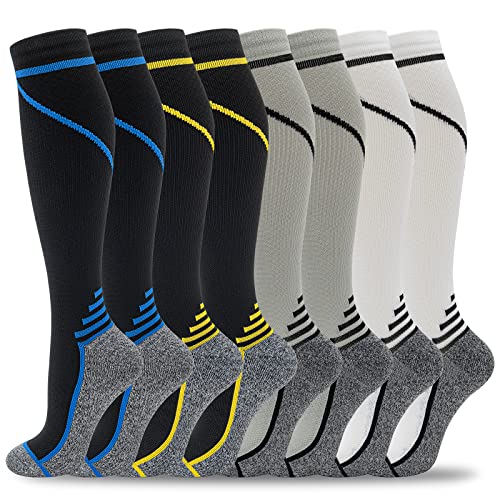
- Knee-high coverage with firmer 20–30 mmHg compression
- Non-slip ribbing, arch support, and reinforced heel and toe
- Eight-pair assortment for running, travel, and daily wear
Best For: Runners seeking firm calf support and multi-pack value
Best Multi-Pack for Mild Support
Copper Compression Socks for Running

- 15–20 mmHg compression for moderate support
- Moisture-wicking nylon blend with 5% copper fiber
- Eight-pair pack for running, travel, and work
Best For: Active shoppers wanting mild compression and easy rotation
Performance Pick – CEP Core Run 5.0 Tall Compression Socks
For runners seeking compression socks for running with stronger, full-calf support, the CEP Core Run 5.0 combines 20–30 mmHg targeted compression with breathable, quick-drying fabric. Its cushioning and smooth toe seam are designed for demanding training sessions and longer days on your feet.
Best For: Runners who want firm, tall compression for training, endurance, and post-run recovery.
Pros:
- 20–30 mmHg compression targets the calf, ankle, Achilles, and arch.
- Breathable air channels and quick-drying materials help manage moisture.
- Cushioning, traction zones, and a smooth toe seam support a stable, low-irritation fit.
- Machine-washable nylon and elastane construction is designed for repeated use.
Cons:
- Firm compression may feel less comfortable for runners who prefer lighter support.
- The tall design offers more coverage than an ankle or crew sock.
- Listed as a single pair, rather than a multipack.
This is a performance-focused option when firm compression and calf coverage matter more than pack size or a minimal design. Check the size carefully for the intended fit.
Multipack Value – Compression Running Socks 3-Pair Cushion Crew
These compression socks for running offer a practical three-pair rotation with 15–20 mmHg gradient compression. CoolMax fibers, mesh knitting, and cushioned heel, sole, and toe areas make them suited to regular running and other active use.
Best For: Runners who want moderate compression and multiple pairs for training, hiking, cycling, or everyday wear.
Pros:
- Three-pair pack provides a convenient rotation for frequent use.
- 15–20 mmHg gradient compression is designed to help reduce ankle swelling and muscle stress.
- CoolMax moisture-wicking fibers and mesh knitting promote breathability.
- Cushioned areas and a seamless toe help reduce friction and irritation.
Cons:
- Crew length may not provide the full-calf coverage of tall compression socks.
- The fabric blend includes cotton, which may feel less quick-drying than a fully synthetic option.
- The supplied details identify the product as a men’s athletic sock.
This pack balances moderate compression, cushioning, and quantity. It is a sensible choice for runners who want everyday versatility rather than the firmest compression level.
Calf-Sleeve Choice – Rymora Calf Compression Sleeves
If you prefer compression socks for running without adding another layer around your feet, these Rymora calf sleeves focus support from the calf downward. Graduated compression, breathable stretch fabric, and moisture-wicking performance make them suitable for running, shin-splint-focused workouts, and recovery.
Best For: Runners who want calf compression while keeping their preferred running socks and footwear.
Pros:
- Calf-only design leaves the foot uncovered for flexible sock and shoe choices.
- Graduated compression is intended to encourage circulation and reduce heavy or achy sensations.
- Lightweight nylon, polyester, and elastane blend offers breathable stretch and moisture management.
- Machine washable and designed to retain shape through repeated wear.
Cons:
- These are sleeves, not complete socks, so separate running socks are required.
- Accurate sizing requires measuring the calf rather than relying on clothing size or height.
- They do not provide foot cushioning or toe protection.
The sleeves are a useful alternative for runners who already have favorite socks or want to separate calf support from foot comfort. Measuring before ordering is especially important for a secure, supportive fit.
Low-Cut Multipack – PAPLUS Ankle Compression Running Socks
For runners who prefer a lower profile, these compression socks for running use 8–15 mmHg ankle compression and come in a six-pair pack. Cushioning under the foot, breathable mesh, and a heel-tab design provide practical comfort for regular training and daily wear.
Best For: Runners who want light ankle support, low-cut coverage, and several pairs for frequent rotation.
Pros:
- Six-pair pack is convenient for regular running and repeated washing.
- 8–15 mmHg compression band supports the arch and is designed to relieve foot fatigue.
- Cushioned heel, toe, and sole areas help absorb shock and reduce friction.
- Mesh upper promotes breathability, while reinforced heel and toe areas support durability.
Cons:
- Lower compression level provides less support than firm tall compression socks.
- Ankle-length coverage does not compress the calf.
- The supplied details list only two available sizes, so fit options may be limited.
This is a practical everyday option for runners who value a low-cut feel and multipack convenience. Choose it for light support and foot cushioning rather than full-leg compression.
Best Overall Support – Physix Gear 20-30 mmHg Running Socks
For runners seeking compression socks for running with firmer support, the Physix Gear pair uses 20-30 mmHg compression and a nylon-spandex construction. Its knee-high design is also positioned for daily wear, travel, and long periods on your feet.
Best For: Runners and active users who prefer firm compression in a versatile, machine-washable sock.
Pros:
- 20-30 mmHg compression provides a firm-support option.
- Nylon-spandex fabric is designed for durability and repeated use.
- Suitable for running, travel, work shifts, and daily wear.
- Machine washable and tumble-dry compatible on low.
Cons:
- The firmer compression may feel less comfortable for shoppers who prefer lighter support.
- The supplied listing identifies a Large/X-Large size, so fit options should be checked carefully.
This is a practical choice when firm compression is the priority. Its broad use case makes it more versatile than a running-only sock, while the included runners eGuide adds useful context for athletic users.
Best Value Multipack – FuelMeFoot Copper Compression Socks
The FuelMeFoot 3-pack is a convenient option for shoppers who want compression socks for running in multiple pairs. The nylon socks emphasize ventilation, softness, odor resistance, and everyday comfort for training or extended wear.
Best For: Runners and active users who want three pairs for rotation, recovery, and daily wear.
Pros:
- Three-pair bundle offers convenient rotation between workouts.
- Copper-infused design is promoted for warmth, odor prevention, and circulation support.
- Nylon construction is described as gentle, ventilated, and quick drying.
- Machine washable and suitable for many activities and occupations.
Cons:
- The supplied notes do not specify a compression level, making support strength harder to compare.
- The listed size is Large-X-Large, so shoppers should confirm fit before ordering.
FuelMeFoot stands out primarily for quantity and versatility. It is a sensible pick for runners who want spare pairs, though buyers seeking a clearly stated compression rating may prefer another option.
Best Lightweight Design – 15-20 mmHg Running Socks
These compression socks for running provide moderate 15-20 mmHg graduated compression, with the strongest pressure at the ankles. The lightweight nylon-polyester-spandex blend adds moisture management, mesh airflow, cushioning, and foot-specific design details.
Best For: Runners who want moderate support, breathable fabric, and performance-focused cushioning.
Pros:
- 15-20 mmHg graduated compression offers moderate support.
- Moisture-wicking fabric and mesh panels help manage sweat and airflow.
- Reinforced cushioning and 3D heel support are designed for running impact and Achilles comfort.
- Three pairs and a broad S-XL size range improve everyday practicality.
Cons:
- Moderate compression may not suit shoppers seeking firm 20-30 mmHg support.
- Careful measuring is still needed because the fit depends on calf and shoe-size ranges.
With its clearly stated compression level, breathable fabric, anatomical labels, and cushioning, this is the most running-specific design of the group. It offers a balanced option for training and post-activity wear without moving into firmer compression.
Best Low-Cut Pick – Ankle Compression Socks with Arch Support
For runners who prefer minimal coverage, these ankle-length compression socks for running combine 15–20 mmHg compression with arch support. Their lightweight nylon-and-spandex fabric is designed to manage sweat while providing targeted support during workouts and everyday activities.
Best For: Runners seeking low-cut socks for training, gym sessions, cycling, or daily wear.
Pros:
- Ankle-length, no-show design suits runners who dislike knee-high socks.
- Targeted compression zones and arch support provide a secure athletic fit.
- Breathable, moisture-managing fabric helps keep feet cool and dry.
- Six-pair pack offers convenient rotation between workouts.
Cons:
- Ankle coverage provides less calf support than knee-high compression socks.
- Only two listed size ranges are available, so careful sizing is important.
This is a practical choice if you want moderate compression in a lightweight, low-profile format. It is less suitable for shoppers specifically seeking full-calf coverage or stronger 20–30 mmHg compression.
Best Knee-High Value – 20–30 mmHg Compression Running Socks
These knee-high compression socks for running provide firmer 20–30 mmHg compression for runners who want coverage extending up the calf. Progressive compression, non-slip ribbing, and reinforced heel and toe details make them suitable for running as well as travel, cycling, and long periods on your feet.
Best For: Runners wanting knee-high calf coverage and a larger multi-pair set for training, travel, or everyday use.
Pros:
- 20–30 mmHg compression offers firmer support than moderate-compression options.
- Knee-high design helps cover the calves and ankles.
- Non-slip ribbing, arch support, and thickened heel and toe add practical running features.
- Eight-pair assortment provides strong rotation value.
Cons:
- Firmer compression may feel less comfortable than lighter compression for some runners.
- Sizing depends on both shoe and calf measurements, requiring careful selection.
- Care instructions recommend laying the socks flat to dry and avoiding ironing.
Choose this set when calf coverage and firmer compression matter more than a minimalist feel. Its eight-pair quantity is particularly useful for runners who train frequently or also use compression socks while traveling.
Best Multi-Pack for Mild Support – Copper Compression Socks for Running
For runners who want moderate compression and a large rotation, these 15–20 mmHg socks use a nylon blend with 5% copper fiber. The breathable, moisture-wicking fabric is designed to help keep feet dry and odor-free during running, gym sessions, work, or travel.
Best For: Runners and active workers who want mild compression in an eight-pair knee-high-style medical compression sock pack.
Pros:
- Moderate 15–20 mmHg compression suits everyday wear and athletic activities.
- Copper-infused fabric is described as breathable, moisture-wicking, and odor-reducing.
- Eight-pair pack simplifies rotation during frequent training or travel.
- Suitable for running, hiking, soccer, gym use, and long periods standing.
Cons:
- The supplied details do not specify a low-cut or ankle-length design.
- The listed color option is black, offering less variety than multi-color assortments.
- Only a Large-X-Large size is identified in the supplied details.
This pack is a sensible value pick for mild compression and frequent use, especially if moisture management and odor control are priorities. Check the available sizing carefully before ordering, particularly if you need a smaller fit.
How We Picked the Best Compression Socks for Running
We focused on the features runners are most likely to notice: stated compression strength, coverage, moisture management, cushioning, arch or Achilles support, durability, and ease of care. The roundup includes knee-high socks, ankle styles, and calf sleeves because each design suits a different use case. We also considered pack size and overall value for runners who train frequently.
Compression ratings are listed in mmHg, but actual comfort depends on construction and fit. Product descriptions can vary, so confirm the size chart and intended use before ordering.
Quick Comparison
| Best For | Look For | Typical Coverage |
|---|---|---|
| Daily training | Moisture-wicking fabric and moderate cushioning | Ankle to knee |
| Long runs and racing | Secure fit, breathable fabric, and graduated compression | Knee-high |
| Shin-focused support | Calf sleeves with room for preferred running socks | Calf only |
| Budget rotation | Multipacks with consistent sizing | Ankle, crew, or knee-high |
Key Buying Factors for Compression Socks for Running
Compression Level
Moderate 15–20 mmHg options are often easier to wear for everyday training, travel, and recovery. Firmer 20–30 mmHg compression may provide a more supportive feel, but it can be harder to put on and should fit correctly. If you have a circulation condition or medical concern, ask a healthcare professional which level is appropriate.
Length and Construction
Knee-high socks offer full-calf coverage and are the most versatile choice for running and recovery. Calf sleeves let you choose your own foot cushioning and shoe-compatible socks. Ankle and crew styles provide lighter coverage and may feel less warm in hot weather.
Comfort and Moisture Control
Look for breathable, quick-drying fabric, a smooth toe seam, a stay-put cuff, and cushioning where your shoes create pressure. A secure fit should feel supportive without numbness, pinching, slipping, or excessive tightness.
Care and Value
Multipacks are practical for frequent runners, but compare fabric quality and sizing rather than pack count alone. Follow the care instructions to preserve elasticity, and replace socks when compression, stretch, or fit noticeably deteriorates.
Who Should Buy Which Compression Socks for Running?
Choose a technical knee-high pair if you want a dedicated racing or long-run option with structured support. Select calf sleeves if your main concern is lower-leg support and you prefer control over the socks covering your feet. Ankle or crew compression socks suit runners who want light support, cushioning, and less coverage.
For frequent training, a three- or eight-pair multipack offers convenient rotation. Runners new to compression should generally start with a comfortable moderate-support option and test it during an easy run before using it for a race. Always prioritize a correct size and comfortable fit over the highest advertised compression rating.