If you train regularly, frequent charging can be as frustrating as inconsistent readings. The best heart rate monitors with long battery life provide dependable tracking while reducing maintenance between workouts.
This roundup compares chest straps, optical armbands, and a fitness band across battery capacity, connectivity, comfort, durability, and compatibility, so you can choose the right sensor for your goals.
Best 10 Heart Rate Monitors with Long Battery Life Picks for 2026
Best Long-Life Chest Strap

- 800-hour replaceable-battery runtime
- ANT+ and Bluetooth compatible
- IP67-rated chest-strap sensor
Best For: Frequent runners, cyclists, and gym users
Best Garmin-Compatible Strap

- Up to one year of battery life
- Tracks heart rate and HRV
- Machine-washable strap
Best For: Garmin smartwatch and cycling-computer users
Best Fitness Band Battery Life

- Up to 21 days per charge
- 1.72-inch AMOLED touchscreen
- Tracks heart rate, sleep, and blood oxygen
Best For: All-day wellness and multi-sport tracking
Best Armband Design

- Comfortable optical upper-arm sensor
- Bluetooth and ANT+ connectivity
- Approximately 30–35 hours per charge
Best For: Users who prefer an armband over a chest strap
Long-Lasting Arm Comfort

- 38 hours of active operation
- Bluetooth pairs with up to three devices
- Soft, breathable armband with wear detection
Best For: COROS users and athletes who prefer an armband
Ultra-Long Battery Pick

- Up to 110 hours per charge
- Bluetooth and ANT+ connectivity
- LEDs indicate heart-rate zones
Best For: Multisport training and extended workouts
High-Capacity Chest Strap
WAHOO TRACKR Heart Rate Monitor

- Over 100 hours of active battery life
- Bluetooth and ANT+ connectivity
- Three simultaneous Bluetooth connections
Best For: Extended training with a connected chest sensor
Best Long-Life Armband

- Up to 30 hours of battery life
- Bluetooth and ANT+ connectivity
- Armband or swimming goggle placement
Best For: Athletes wanting a comfortable, wrist-free optical sensor
Best Extended-Battery Chest Strap
POWR LABS Bluetooth ANT+ Monitor
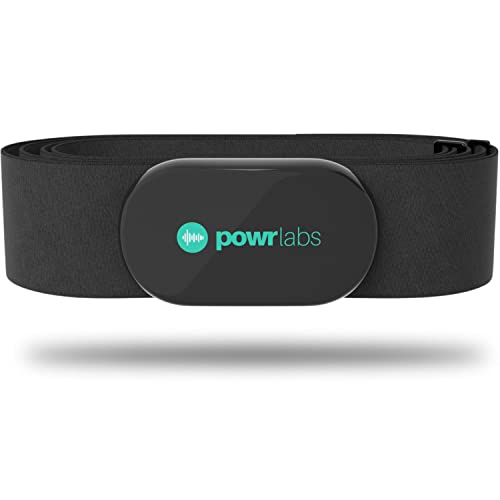
- 400-plus hours of claimed battery life
- Replaceable battery included
- Dual Bluetooth and ANT+ connectivity
Best For: High-frequency training with minimal charging
Best HRV Armband

- Up to 24 hours of continuous use
- Bluetooth and ANT+ connectivity
- HRV mode with IP68 waterproofing
Best For: Workout and HRV tracking without a chest strap
Best Long-Life Chest Strap – GEOID HS500
For shoppers comparing heart rate monitors with long battery life, the GEOID HS500 stands out with up to 800 hours from a replaceable CR2032 battery. Its chest-strap design, ANT+ and Bluetooth connectivity, and IP67 rating make it a practical choice for regular training.
Best For: Runners, cyclists, and fitness users who want extended battery life and broad app or equipment compatibility.
Pros:
- Up to 800 hours of battery life with a replaceable CR2032 battery
- Supports both ANT+ and Bluetooth connections
- IP67 water resistance and automatic wake-up
- LED confirms connection and readiness
Cons:
- Swimming is not recommended
- Requires connection through the fitness app rather than directly through the phone’s Bluetooth settings
The HS500 is a strong value for athletes who prioritize fewer battery changes without giving up compatibility with phones, watches, bike computers, and training platforms.
Best Garmin-Compatible Strap – Garmin HRM 200
The Garmin HRM 200 is a straightforward option for shoppers seeking heart rate monitors with long battery life and dependable Garmin integration. It transmits real-time heart rate and heart rate variability data, while its user-replaceable battery lasts up to one year.
Best For: Garmin smartwatch and cycling-computer users who want a durable, low-maintenance heart rate strap.
Pros:
- Up to one year of battery life
- Provides real-time heart rate and HRV data
- Available in two strap sizes
- Machine-washable strap and 3 ATM water rating
Cons:
- Shorter stated battery life than several dedicated long-runtime competitors
- Chest-strap format may be less convenient than a wrist or arm sensor
With Garmin-focused compatibility, washable construction, and a replaceable battery, the HRM 200 is a sensible choice for users already invested in Garmin’s ecosystem.
Best Fitness Band Battery Life – Xiaomi Smart Band 10
For anyone wanting heart rate monitors with long battery life in a wrist-worn format, the Xiaomi Smart Band 10 offers up to 21 days per charge. It combines heart-rate tracking with sleep monitoring, blood oxygen measurements, multi-sport features, and a bright 1.72-inch AMOLED touchscreen.
Best For: Everyday users who want long-lasting wearable tracking plus a large display and broad wellness features.
Pros:
- Up to 21 days of battery life
- Large, bright 1.72-inch AMOLED touchscreen
- Tracks heart rate, sleep, and blood oxygen
- Supports multi-sport and swimming features with 50-meter water resistance
Cons:
- Does not include GPS geotagging functionality
- Xiaomi Fit uses the metric system; imperial measurements may require a third-party connection
The Smart Band 10 is better suited to all-day health and activity tracking than dedicated training transmission, but its 21-day runtime makes it especially convenient for users who dislike frequent charging.
Best Armband Design – Wahoo TICKR FIT
The Wahoo TICKR FIT is an optical armband for shoppers comparing heart rate monitors with long battery life who prefer to avoid a chest strap. It connects over Bluetooth or ANT+ and tracks heart rate, calories, and workout duration, with a rechargeable battery rated for roughly 30 to 35 hours.
Best For: Athletes who prefer a comfortable upper-arm sensor for app-based workouts and GPS-device connectivity.
Pros:
- Comfortable optical armband design with no chest strap
- Bluetooth and ANT+ connectivity
- Two adjustable strap sizes included
- IPX7 water resistance and connection-status LED
Cons:
- About 30 to 35 hours of battery life is modest for this roundup
- Rechargeable battery requires more frequent charging than replaceable-battery models
The TICKR FIT trades maximum runtime for a less restrictive armband design. It is a good fit for users who value comfort and dual-protocol compatibility over multi-month battery intervals.
Long-Lasting Arm Comfort – COROS Heart Rate Monitor
The COROS Heart Rate Monitor is a comfortable armband option for shoppers comparing heart rate monitors with long battery life. It provides up to 38 hours of active operation, automatic wear detection, and Bluetooth pairing with as many as three devices.
Best For: COROS users and athletes who prefer a breathable arm sensor over a chest strap.
Pros:
- Provides 38 hours of operation or up to 80 days on standby.
- Can connect simultaneously to up to three Bluetooth devices.
- Soft, breathable band is designed for comfortable sports use.
- Wear detection automatically powers the monitor on and off.
Cons:
- Bluetooth only; it does not support ANT+.
- Designed for sports and activities rather than daily heart-rate tracking.
- USB charging cable is included, but a Type-C adapter is not.
Choose this model if comfort, automatic wear detection, and multi-device Bluetooth connectivity matter more than ANT+ compatibility or all-day tracking.
Ultra-Long Battery Pick – CYCPLUS H1 Heart Rate Monitor
The CYCPLUS H1 stands out among heart rate monitors with long battery life, offering up to 110 hours per charge. Its optical sensor supports real-time readings, while Bluetooth 5.1 and ANT+ provide broad compatibility with phones, watches, cycling computers, and fitness equipment.
Best For: Multisport athletes who want very long runtime, ANT+ support, and visible heart-rate-zone indicators.
Pros:
- Offers up to 110 hours of battery life with a 30-minute magnetic charge.
- Supports both Bluetooth 5.1 and ANT+ connections.
- Color LED indicators show heart-rate zones at a glance.
- IP67-rated design is suitable for active workouts.
Cons:
- Has no built-in display, so readings require a connected device.
- Zone color thresholds may not match every athlete’s preferred zones.
- Upper- or lower-arm placement may not suit shoppers seeking a chest strap.
With its 110-hour rating and dual wireless protocols, the H1 is a practical choice for frequent training sessions where charging interruptions are especially inconvenient.
High-Capacity Chest Strap – WAHOO TRACKR Heart Rate Monitor
The WAHOO TRACKR is a rechargeable chest-strap monitor built for athletes who want heart rate monitors with long battery life. It delivers real-time data, supports Bluetooth and ANT+, and is rated for more than 100 hours of active use, with the supplied details listing up to 200 hours.
Best For: Serious training setups that need a comfortable chest sensor with broad connectivity and extended runtime.
Pros:
- High-capacity rechargeable battery supports extended active use.
- Works with Bluetooth and ANT+ devices, apps, and fitness equipment.
- Supports three simultaneous Bluetooth connections.
- Soft, secure strap and LED indicators enhance workout usability.
Cons:
- Chest-strap design may be less comfortable than an armband for some users.
- The supplied battery claims vary between over 100 and up to 200 hours.
- Listed warranty coverage is one year.
The TRACKR is a strong fit when you want chest-strap placement, ANT+ compatibility, and unusually long rechargeable battery life for ongoing training.
Best Long-Life Armband – Polar Verity Sense
For athletes seeking heart rate monitors with long battery life, the Polar Verity Sense offers up to 30 hours of use in a compact optical armband. Its upper-arm, forearm, or goggle-clip placement keeps your wrist free while supporting Bluetooth and ANT+ connections.
Best For: Swimmers, runners, cyclists, and athletes who prefer an unobtrusive armband over a chest strap or wrist-based sensor.
Pros:
- Up to 30 hours of battery life for extended training sessions.
- Supports two simultaneous Bluetooth connections and unlimited ANT+ connections.
- Lightweight 19-gram design with flexible placement options.
- Includes an armband, swimming goggle clip, pouch, and charging unit.
Cons:
- The battery is not replaceable.
- It requires a compatible phone, watch, fitness device, or app for live readings.
The Verity Sense is a versatile choice when comfort and placement flexibility matter as much as battery runtime. Its 30-hour rating is useful for frequent workouts, though it needs recharging more often than replaceable-battery chest straps.
Best Extended-Battery Chest Strap – POWR LABS Bluetooth ANT+ Monitor
The POWR LABS chest strap stands out among heart rate monitors with long battery life, offering a claimed 400-plus hours from a replaceable battery. Dual Bluetooth and ANT+ connectivity makes it suitable for pairing with Garmin, Peloton, cycling computers, smartwatches, and compatible fitness apps.
Best For: Frequent runners, cyclists, and indoor-training users who want months of use without regular charging.
Pros:
- 400-plus hours of battery life, potentially covering six months of daily training.
- Replaceable battery eliminates the need for charging cables.
- Dual Bluetooth and ANT+ connectivity works with numerous devices and apps.
- IPX67 sweatproof and water-resistant construction for demanding workouts.
Cons:
- A chest strap may feel less convenient than an armband for some users.
- Pairing requires wearing the monitor before initiating the connection.
- The supplied notes list differing strap-fit measurements, so check sizing carefully.
This is the strongest option here for minimizing battery maintenance. Its replaceable-battery design and broad connectivity are particularly practical for athletes who train often and do not want to recharge after every block of workouts.
Best HRV Armband – Scosche Rhythm+ 2.0
The Scosche Rhythm+ 2.0 is a practical pick among heart rate monitors with long battery life when you want an optical armband with up to 24 hours of continuous use. It connects through Bluetooth or ANT+ and adds an HRV mode for compatible training, sleep, and stress apps.
Best For: Runners, cyclists, and gym users who want a comfortable alternative to a chest strap with HRV data support.
Pros:
- Up to 24 hours of continuous battery life.
- Bluetooth and ANT+ compatibility supports watches, fitness equipment, and apps.
- Adjustable forearm, bicep, or tricep placement stays secure during workouts.
- IP68 waterproofing and HRV mode add versatility.
Cons:
- Its 24-hour runtime is shorter than the Polar and POWR LABS alternatives.
- The rechargeable lithium-ion battery requires periodic charging.
- Advanced RR interval data depends on compatible HRV apps.
The Rhythm+ 2.0 balances comfortable placement, durable construction, and useful connectivity. It is a good middle-ground option for regular workouts, especially if HRV tracking is more important to you than maximum battery longevity.
How We Picked the Best Heart Rate Monitors with Long Battery Life
We focused on products that combine useful battery endurance with reliable heart rate tracking and broad device compatibility. The selection includes chest straps, optical armbands, and a multisport fitness band because each design suits different training preferences.
We also considered connection protocols such as Bluetooth and ANT+, water resistance, wearing comfort, automatic detection, and whether a monitor works with common watches, cycling computers, gym equipment, and training apps. Battery claims vary by product and usage, so treat published runtimes as estimates rather than guarantees.
Quick Comparison
- Best for maximum battery endurance: HS500, with a published 800-hour battery rating.
- Best for a Garmin ecosystem: Garmin HRM 200.
- Best for an all-in-one fitness tracker: Xiaomi Mi Smart Band 10.
- Best for armband comfort: Wahoo TICKR FIT, COROS, Polar Verity Sense, or Scosche Rhythm.
- Best for budget-friendly ANT+/Bluetooth use: POWR LABS or CYCPLUS H1.
Key Buying Factors for Heart Rate Monitors with Long Battery Life
Battery Type and Charging
Replaceable-cell chest straps can offer exceptionally long runtimes and are convenient for athletes who do not want to recharge weekly. Rechargeable armbands are typically easier to maintain but require access to a charging cable. Check whether the stated battery life applies to continuous use, standby time, or a particular workout schedule.
Chest Strap Versus Optical Armband
Chest straps generally provide fast, responsive readings during intervals and high-intensity exercise, but some users find them restrictive. Optical armbands are often more comfortable for long sessions and can be easier to put on, though fit, skin contact, movement, and tattoos can affect accuracy.
Connectivity and Compatibility
ANT+ is useful for watches, bike computers, and gym equipment, while Bluetooth is common with phones and modern apps. Dual-protocol monitors offer the most flexibility. Confirm device limits if you plan to connect to multiple receivers at once, and check compatibility with your preferred training platform before buying.
Water Resistance and Fit
For swimming, heavy sweat, or outdoor training, look for a suitable water-resistance rating and a secure, adjustable fit. An accurate sensor is only useful if it stays in place throughout the workout.
Who Should Buy Which Heart Rate Monitors with Long Battery Life?
Choose the HS500 if your top priority is minimizing battery changes. Garmin users should consider the HRM 200, while athletes wanting a comfortable optical design can look at the TICKR FIT, COROS, Polar Verity Sense, CYCPLUS H1, Wahoo TRACKR, or Scosche Rhythm. Choose the POWR LABS strap when broad ANT+/Bluetooth compatibility matters on a budget. If you want heart rate tracking plus steps, activity data, a display, and an unusually long rated runtime, the Xiaomi Mi Smart Band 10 is the more versatile choice.