The best pull-up bars for circuit training make it easier to move between upper-body pulling, pushing, core, and conditioning exercises without leaving your home gym. This roundup covers freestanding power towers, doorway bars, wall-mounted designs, and foldable stations for different spaces and training styles.
As you compare these options, focus on stability, usable height, grip variety, weight capacity, and how quickly each bar can transition between exercises. The right choice should match both your available space and the intensity of your circuits.
Best 10 Pull Up Bars for Circuit Training Picks for 2026
Best Overall
Sportsroyals Free Standing Power Tower

- 360-pound capacity with thickened steel
- Supports pull-ups, dips, rows, and leg raises
- Eight height settings for family use
Best For: Full-body circuit training and shared home use
Best Doorway Option
KAKICLAY Multi-Grip Pull-Up Bar

- 440-pound stated weight capacity
- Includes suspension straps and multiple grips
- Folds for compact storage
Best For: Space-conscious doorway circuits
Best Adjustable Tower
RELIFE Free Standing Power Tower

- 400-pound stated weight capacity
- Nine height settings for different users
- Supports pull-ups, dips, rows, and knee raises
Best For: Family-friendly adjustable circuits
Foldable Stability Pick

- Triangular frame folds for storage
- 11 height settings and 350-lb capacity
- Supports pull-ups, dips, and leg raises
Best For: Adjustable full-body home circuits
Doorway Convenience Pick
Sportneer No-Drill Pull-Up Bar

- Adjusts from 29.5 to 37 inches
- 440-lb stated capacity with safety locks
- Requires a compatible solid wood doorway
Best For: Compact pull-up-centered circuits
High-Capacity Circuit Pick
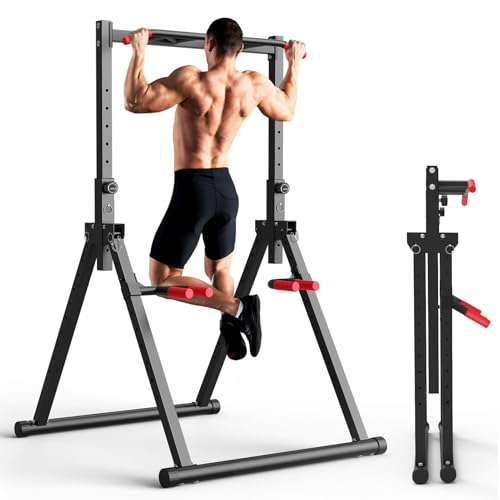
- 440-lb capacity and reinforced steel frame
- Five pull-up grips and adjustable handles
- Folds flat for storage after full-body workouts
Best For: Advanced, multi-user home circuits
Best with Extra Features
Heavy-Duty Multi-Grip Doorway Bar

- 440-pound stated maximum weight recommendation
- Supports pull-ups, dips, push-ups, and crunches
- No-screw design with silicone frame protection
Best For: Compact doorway-based circuits
Best Heavy-Duty Pick

- 10 height settings from 62.25 to 78 inches
- Includes two pull-up assistance bands
- Combines pull-up, dip, and push-up stations
Best For: Shared home circuits and assisted training
Best High-Capacity Tower
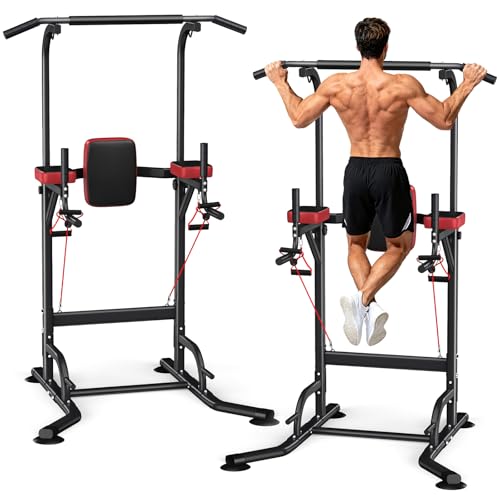
- 450-pound stated maximum weight recommendation
- 13 pull-up height settings from 72 to 87.8 inches
- Includes pull-up, dip, push-up, and core stations
Best For: High-capacity full-body home circuits
Best Overall – Sportsroyals Free Standing Power Tower
For circuit training that moves from pull-ups to dips, leg raises, rows, and push-ups, the Sportsroyals power tower offers a versatile home setup. Its adjustable height, supportive padding, and 360-pound capacity make it a practical choice for varied bodyweight workouts.
Best For: Full-body circuit training and shared family use.
Pros:
- Supports up to 360 pounds with thickened commercial steel.
- Combines pull-ups, dips, rows, leg raises, and push-ups.
- Offers eight height settings and five backrest adjustments.
- Includes angled armrests, padded support, and nonslip grips.
Cons:
- Its freestanding design requires floor space and assembly.
- The backrest and assisted-dip features may be unnecessary for users seeking only a pull-up bar.
This is the most exercise-rich option in the roundup, especially if your circuit training includes several upper-body and core movements rather than pull-ups alone.
Best Doorway Option – KAKICLAY Multi-Grip Pull-Up Bar
The KAKICLAY doorway bar is a space-saving choice for pull up bars for circuit training, particularly when you want multiple grips and quick storage. Included suspension straps add options beyond standard pull-ups, while the foldable design suits compact homes.
Best For: Doorway-based circuits with pull-ups, grip changes, and suspension exercises.
Pros:
- Rated for up to 440 pounds.
- Provides multiple grip positions with ergonomic angled ends and foam padding.
- Includes suspension straps for more workout variations.
- Folds for storage and uses silicone door protectors.
Cons:
- Requires a compatible door opening measuring 21.65 to 36.22 inches wide.
- Not suitable for hollow plasterboard walls, and the doorframe must be structurally sound.
Choose this model when portability and storage matter most. Measure the inside of your doorframe carefully before buying, since fit and frame condition are essential.
Best Adjustable Tower – RELIFE Free Standing Power Tower
The RELIFE power tower brings pull-ups, dips, rows, knee raises, and push-ups into one adjustable station. With nine height levels and a 400-pound capacity, it can support progressive pull up bars for circuit training for multiple users in a home gym.
Best For: Adjustable, full-body circuits for different household users.
Pros:
- Supports up to 400 pounds with reinforced steel tubing.
- Handles pull-ups, chin-ups, dips, rows, knee raises, and push-ups.
- Offers nine height settings, including a lower setting for children.
- Uses a safety locknut and four suction cups for added stability.
Cons:
- This model has no backrest.
- Its freestanding 34-by-26.4-inch footprint may require dedicated floor space.
Its wide height range makes the RELIFE a flexible family station. It is a strong fit for varied circuits, though users wanting padded back support should consider another tower.
Best Wall-Mounted Pick – HANDBODE 500-Lb Pull-Up Bar
The HANDBODE wall-mounted bar is suited to compact workout areas where a fixed installation is preferable. Its knurled grip supports standard pull-ups, while the included carabiners let you add suspension straps or resistance bands to your circuit training.
Best For: Space-saving mounted circuits with accessory attachments.
Pros:
- Offers a stated 500-pound capacity with heavy-duty steel construction.
- Two-section knurling helps provide a secure grip.
- Carabiners support suspension straps, resistance bands, and other accessories.
- Can be installed on walls or wooden surfaces.
Cons:
- Installation is required, so it is less portable than freestanding or doorway models.
- Mounting surfaces must be suitable for the installation.
This bar is a practical foundation for a compact circuit setup, especially when you already use bands or suspension equipment. Its value depends on having a secure wall, beam, or wooden mounting location.
Foldable Stability Pick – YYJO Foldable Power Tower
For pull up bars for circuit training, the YYJO Foldable Power Tower combines pull-ups, dips, leg raises, and other movements in one freestanding station. Its triangular frame, adjustable height, and 350-pound capacity make it a practical option for varied home workouts.
Best For: Home users who want a foldable, adjustable station for full-body circuit training.
Pros:
- Triangular steel design is built for stability and folds for storage.
- Supports up to 350 pounds and offers 11 height adjustments from 68.9 to 82.68 inches.
- Supports pull-ups, dips, leg raises, abdominal work, and other exercises.
- Its 24-inch interior width allows room for movement during workouts.
Cons:
- Freestanding design requires more floor space during use than a doorway bar.
- Minimal assembly is still required before training.
The YYJO is a versatile choice when your circuit includes more than pull-ups. It is especially useful for users who need adjustable height and fold-away storage, though its 350-pound limit is lower than some competing power towers.
Doorway Convenience Pick – Sportneer No-Drill Pull-Up Bar
If you need pull up bars for circuit training without dedicating floor space, the Sportneer Doorway Pull-Up Bar offers a no-drill setup for compatible solid wood frames. Its adjustable 29.5- to 37-inch range and safety-lock design suit compact home routines.
Best For: Users who want a removable pull-up bar for circuits in a compatible solid wood doorway.
Pros:
- No-drill installation leaves no intended mounting holes.
- Supports up to 440 pounds with steel construction.
- Dual gear locks, metal fixed points, and PVC mats are designed to improve stability.
- Independently tested to ASTM, EN957, and CA65 standards, according to the supplied notes.
Cons:
- Only fits solid wood door frames measuring 29.5 to 37 inches wide.
- Longer use distances may reduce the bar’s load capacity.
- Strong adhesion may peel paint or plaster when removed.
The Sportneer is a space-efficient choice for pull-up-focused circuits, especially in smaller homes. Check the doorway material and width carefully before buying, since compatibility is more limited than with a freestanding station.
High-Capacity Circuit Pick – SERTT Foldable Power Tower
The SERTT Foldable Power Tower is designed for demanding pull up bars for circuit training, with pull-up grips, dips, push-ups, knee raises, and inverted rows in one station. Its foldable triangular frame, broad exercise area, and 440-pound capacity make it suitable for varied, high-intensity home sessions.
Best For: Families or serious home users seeking a high-capacity, multi-exercise circuit station.
Pros:
- Supports up to 440 pounds with 2mm thick steel tubing.
- Folds flat and uses a triangular design for stability and storage.
- Offers five pull-up grips plus adjustable pull-up, dip, and push-up positions.
- Includes a 39.4-inch-wide exercise area and tools for approximately 20-minute assembly.
Cons:
- Its broad freestanding frame needs substantial floor space when set up.
- More adjustment features may require additional setup between exercises.
Among these options, the SERTT offers the broadest circuit-training range and the highest stated capacity. It is a strong fit when multiple users or advanced routines matter, provided you have room for a full power tower.
Best with Extra Features – Heavy-Duty Multi-Grip Doorway Bar
If you want pull up bars for circuit training without dedicating floor space to a power tower, this doorway model supports several upper-body and core movements. Its 440-pound stated capacity, multi-grip design, and no-screw installation make it practical for compact home or office workouts, provided your doorway matches the listed dimensions.
Best For: Space-conscious users who want pull-ups, push-ups, dips, and hanging crunches from one portable doorway bar.
Pros:
- Thickened steel construction with a stated 440-pound maximum weight recommendation.
- Supports pull-ups, push-ups, dips, and hanging crunches for circuit variety.
- Silicone door-frame protection and removable no-trace pads help reduce marking.
- Fits listed standard doorways measuring 24 to 32 inches wide.
Cons:
- Requires a compatible doorway with specific depth, trim height, and trim-thickness measurements.
- Doorway leverage mounting may be less suitable than a freestanding station for users seeking dedicated dip or leg-raise supports.
For compact circuit sessions, the Ally Peaks bar is a versatile option with a high stated load limit. Measure your frame carefully and test the installation by tugging down on the grips before exercising.
Best Heavy-Duty Pick – 3-in-1 Power Tower With Bands
This DERACY power tower is a strong fit for pull up bars for circuit training when you want multiple stations in one freestanding unit. It combines pull-up, dip, and push-up functions, adds two assistance bands, and offers 10 height settings for shared household use.
Best For: Families or beginners building varied bodyweight circuits with adjustable height and band assistance.
Pros:
- Combines pull-ups, dips, push-ups, hanging leg raises, knee lifts, and inverted rows.
- 10 height positions adjust the pull-up bar from 62.25 to 78 inches.
- Includes two assistance resistance bands for supported repetitions or added exercise variety.
- Wide H-shaped base and anti-slip suction cups are designed to reduce wobble.
Cons:
- Its stated maximum weight recommendation is 330 pounds, lower than some competing towers.
- Freestanding construction requires more floor space than a doorway bar.
The DERACY tower offers a practical progression-friendly setup: use the bands for assistance, then move through pull-ups, dips, and core work in one circuit. Its height range is useful for mixed-height households.
Best High-Capacity Tower – 13-Position Power Tower
For users comparing pull up bars for circuit training with a higher stated load limit, the Dskeuzeew power tower offers a 450-pound maximum weight recommendation and a broad exercise selection. Its adjustable pull-up height, dip station, push-up handles, pads, and included elastic ropes support a more complete freestanding routine.
Best For: Users who prioritize a high stated capacity, extensive height adjustment, and multiple upper-body and core stations.
Pros:
- Commercial-grade steel construction with a stated 450-pound maximum weight recommendation.
- 13 pull-up height settings from 72 to 87.8 inches accommodate different users.
- Supports pull-ups, rows, knee raises, triceps dips, and push-ups.
- H-shaped base with industrial-strength suction cups is designed for stability.
Cons:
- Its 72-inch minimum pull-up height may be less convenient in rooms with low ceilings.
- Assembly is required, and the instructions emphasize tightening all screws securely.
- The freestanding footprint takes more room than a doorway-mounted bar.
The Dskeuzeew is the most capacity-focused choice in this group and gives circuit trainers plenty of station variety. Confirm available ceiling and floor space before assembly, then select the height that allows proper form.
How We Picked the Best Pull Up Bars for Circuit Training
We evaluated these 10 pull-up bars by looking at the features that matter most during fast-paced home workouts. Stability was a priority, especially for freestanding power towers used for pull-ups, dips, knee raises, and assisted movements. We also considered construction, adjustment range, grip options, footprint, portability, and the practical demands of switching exercises between rounds.
Doorway models were judged separately from freestanding stations because they serve different needs. A doorway bar can be convenient and space-efficient, while a power tower generally offers more exercise variety and a more stable base when properly assembled on a level surface.
Quick Comparison
| Type | Best For | Main Advantage | Potential Trade-Off |
|---|---|---|---|
| Freestanding power tower | Full-body circuits | Supports pull-ups, dips, push-ups, and core work | Requires more floor space |
| Doorway pull-up bar | Small homes and apartments | Compact and quick to use | Limited by doorway width and frame strength |
| Wall-mounted bar | Permanent home gyms | Solid installation and good overhead clearance | Requires suitable wall structure and hardware |
| Foldable tower | Shared or multipurpose rooms | Can be stored between workouts | More setup and folding mechanisms to maintain |
Key Buying Factors for Pull-Up Bars for Circuit Training
Stability and Weight Capacity
Look for a broad base, secure frame connections, and a stated weight rating that exceeds your body weight plus any added load. During circuits, momentum and rapid transitions can place more stress on the equipment than slow, controlled repetitions.
Exercise Versatility
Multiple grip positions can support pull-ups, chin-ups, and neutral-grip work. If your circuit includes dips, push-ups, vertical knee raises, or assisted pull-ups, a power tower with dedicated handles or bands may provide better value than a single-purpose bar.
Fit, Height, and Clearance
Measure ceiling height, doorway width, wall space, and the surrounding workout area before buying. You need enough overhead clearance to complete repetitions safely and enough room to step around the station without striking furniture or walls.
Installation and Adjustability
No-drill doorway bars are convenient, but they must be compatible with the frame and installed exactly as directed. Wall-mounted models need appropriate studs or masonry anchors. Adjustable and foldable towers can improve usability, particularly when several people share the equipment.
Who Should Buy Which Pull Up Bars for Circuit Training?
Choose a freestanding power tower if you want one station for varied circuits involving pull-ups, dips, push-ups, and abdominal exercises. A foldable tower is a practical choice when storage space matters. Pick a doorway bar if you primarily need pull-ups and chin-ups in a compact setup. A wall-mounted bar is best for dedicated training areas where permanent installation and overhead clearance are available.
Before ordering, verify the product’s dimensions, maximum load, mounting or assembly requirements, and return policy. For the safest results, inspect fasteners and contact points regularly, use the equipment on a suitable surface, and progress gradually when adding bands or external weight.