The best running vest keeps water, your phone, and small essentials secure without bouncing or restricting your stride. The right capacity depends on whether you run short daily routes, longer races, or remote trails.
This roundup compares 10 running vests with features such as soft flasks, hydration bladders, reflective details, adjustable straps, and dedicated phone storage. Use the guide below to narrow the options by distance, load, and fit.
Best 10 Running Vests Picks for 2026
Best Lightweight Pick
SwiftVest 500ml Running Hydration Vest
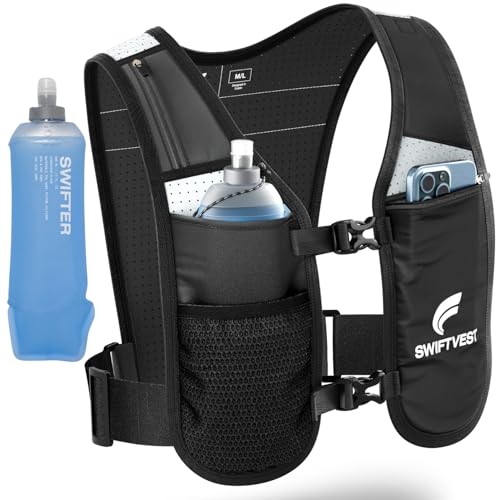
- Includes a compressible 500ml soft flask
- Six pockets with a water-resistant phone pouch
- Reflective, adjustable, and chafe-conscious design
Best For: Road runners wanting compact hydration and organized storage
Best for Longer Outings
Becojadde 5L/6L Hydration Running Vest

- Available in 5L or 6L storage versions
- Optional 1.5L/2L bladder or dual 500ml bottles
- Eight-pocket layout with chest and waist adjustment
Best For: Trail runs, hikes, and longer sessions requiring extra gear
Best Minimalist Chest Pack
MVRK Water-Resistant Running Vest

- Ultra-light 22.68g compact chest-pack design
- Three zippered compartments for small essentials
- Water-resistant Cordura nylon with reflective print
Best For: Short runs needing phone, keys, and wallet storage
Best Storage-to-Weight Balance
Zelvot 500ml Hydration Running Vest

- Includes a 500ml BPA- and PVC-free soft flask
- Nine pockets with hidden phone storage
- Lightweight neoprene design with three chest straps
Best For: Runners needing organized storage and quick-access hydration
Best for Long Runs

- 2L BPA- and PVC-free bladder
- Five storage areas plus front zip pockets
- Adjustable, reflective, breathable design
Best For: Trail runners and marathoners needing substantial hydration and storage
Best for Everyday Use
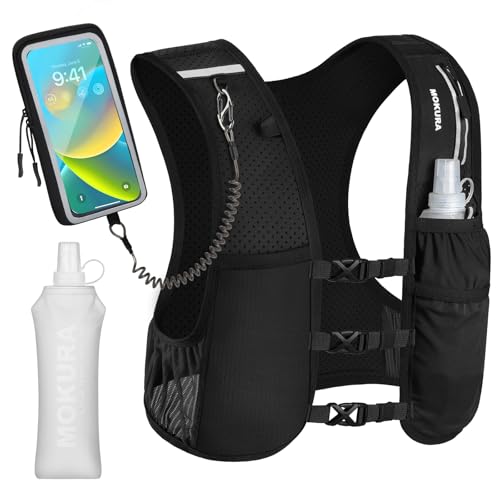
- Weighs 9.6 ounces
- Includes a 500ml soft flask
- Five pockets with phone storage
Best For: Shorter runs and workouts where low bulk matters
Best Ultralight Hydration Pack

- Weighs only 140 grams
- Includes a 1.5L water bladder
- Ventilated mesh and reflective trim
Best For: Runners and cyclists wanting moderate hydration with minimal weight
Best Overall
Maelstrom Lightweight Hydration Vest

- Includes a 500ml BPA-free soft flask
- Lightweight, breathable 250g construction
- Five pockets with adjustable, reflective fit
Best For: Marathon training, trail runs, and organized carry
Best for Low-Light Runs

- Under-250g single-flask hydration design
- Reflective strips on front and back
- Breathable neoprene mesh with adjustable fit
Best For: Dawn, dusk, and nighttime workouts
Best for Simple Storage
Katroiy Adjustable Hydration Vest

- Includes a collapsible 500ml soft bottle
- Front and rear zippered storage
- Breathable mesh with adjustable shoulder and chest straps
Best For: Everyday runs, hiking, and cycling
Best Lightweight Pick – SwiftVest 500ml Running Hydration Vest
For runners seeking practical running vests without excessive bulk, the SwiftVest combines a 500ml soft flask with six accessible pockets. Its adjustable fit, reflective details, and water-resistant phone storage make it suitable for everyday training in changing conditions.
Best For: Road runners who want lightweight hydration, phone protection, and organized storage for shorter runs or longer training sessions.
Pros:
- Includes a compressible 500ml/17oz soft flask.
- Six pockets provide space for a phone, keys, gels, and other essentials.
- Reflective detailing, quick-dry material, and heat-dissipation zones support comfortable low-light running.
- Adjustable straps and neoprene padding help reduce bounce and chafing.
Cons:
- The 500ml capacity may be limited for runners needing more water on long or remote routes.
- The waterproof phone pouch fits devices up to 18cm x 10cm, so larger phones may not fit.
With a 285g weight and three available size ranges, this vest offers a balanced option for runners prioritizing a close, low-profile fit and essential hydration rather than maximum carrying capacity.
Best for Longer Outings – Becojadde 5L/6L Hydration Running Vest
Among running vests, the Becojadde hydropack stands out for runners who need more room for clothing, snacks, and equipment. It is available as a vest-only option or with a 1.5L bladder, 2L bladder, or two 500ml soft bottles, depending on the selected configuration.
Best For: Trail runners, hikers, cyclists, and marathon trainees who need expanded storage and adjustable support for longer outings.
Pros:
- 5L and 6L capacities provide substantially more storage than minimalist running vests.
- Multiple configurations accommodate a 1.5L bladder, 2L bladder, or two 500ml bottles.
- Up to eight pockets include phone, snack, key, utility, and rear zippered compartments.
- Adjustable chest and dual waist straps, tube clips, and securing loops help minimize bounce.
Cons:
- Hydration containers are not included with every configuration, so the selected version matters.
- The larger 5L or 6L format may feel excessive for short runs carrying only essentials.
Its breathable stretch fabric, ventilated mesh back, and broad storage layout make this a versatile choice when a small phone-and-keys vest is not enough. Check the configuration carefully before buying.
Best Minimalist Chest Pack – MVRK Water-Resistant Running Vest
If you want running vests mainly for carrying a phone, wallet, and small personal items, the MVRK Chest Pack keeps the design compact. Its water-resistant Cordura nylon construction, reflective print, and adjustable vest harness are aimed at lightweight training and everyday outdoor use.
Best For: Runners who need a low-volume phone and essentials carrier rather than built-in hydration.
Pros:
- Compact 4″ x 7″ chest-pack design weighs only 22.68g.
- Three zippered compartments organize a phone, wallet, cards, keys, and small gear.
- Water-resistant Cordura nylon offers durability for gym sessions and outdoor training.
- Neoprene contact padding, adjustable straps, and reflective detailing improve practicality.
Cons:
- It does not include a water bottle or hydration reservoir.
- Storage volume is limited to 28 cubic inches, making it unsuitable for bulky gear.
- The phone compartment is listed for devices up to 5.5 inches.
This is better understood as a lightweight chest pack than a full hydration vest. Choose it when secure, weather-resistant storage is the priority and you prefer carrying water separately.
Best Storage-to-Weight Balance – Zelvot 500ml Hydration Running Vest
The Zelvot is one of the more storage-focused running vests while remaining lightweight at 7.5 ounces. It includes a 500ml BPA- and PVC-free soft flask, nine pockets, reflective details, and three adjustable chest straps for a stable fit during training or race day.
Best For: Runners who want quick-access hydration and extensive front-and-rear storage in a lightweight, adjustable vest.
Pros:
- Includes a 500ml soft flask designed to shrink as you drink and reduce sloshing.
- Nine pockets include a hidden zippered phone pocket, flask pockets, shoulder pockets, and rear storage.
- Breathable neoprene with ventilation holes supports airflow and moisture management.
- Three adjustable chest straps and reflective front and back details support stability and visibility.
Cons:
- The included 500ml flask may not provide enough capacity for very long outings.
- Correct sizing requires measuring chest circumference rather than relying on usual clothing size.
- The available color listed in the supplied details is purple.
With dedicated flask storage and nine total pockets, the Zelvot offers a strong compromise between carrying capacity and weight. Its detailed chest-size ranges are useful, but measuring accurately is essential for a secure fit.
Best for Long Runs – 2L Running Hydration Vest
If you need substantial hydration and storage, this running vest combines a 2-liter bladder with adjustable shoulder straps and a waist belt. Its multiple pockets and reflective details make it suited to longer runs, trail outings, and other outdoor activities.
Best For: Trail runners, marathoners, and outdoor athletes who want 2-liter hydration and generous storage.
Pros:
- Includes a 2L BPA- and PVC-free bladder with a high-flow bite valve.
- Three front zippered pockets and two large back pockets provide useful gear storage.
- Adjustable shoulder straps and waist belt help limit shifting and bounce.
- Reflective details, breathable mesh, and water-resistant 900D Oxford fabric add practical utility.
Cons:
- At 0.65 kg, it is heavier than minimalist running vests.
- The larger 2-liter design may be more capacity than short runs require.
- The detachable pistol holster may be unnecessary for many runners.
This is a storage-focused hydration vest for runners who regularly spend extended time outdoors. Choose it when capacity, pockets, and adjustability matter more than ultralight weight.
Best for Everyday Use – 500ML Soft-Flask Running Vest
This lightweight running vest weighs 9.6 ounces and includes a 500ml soft flask for shorter training sessions. Breathable neoprene, stretch waist panels, adjustable chest straps, and a dedicated phone holder focus on a secure, low-bulk fit.
Best For: Runners, walkers, and cyclists who prefer compact hydration and easy-access phone storage.
Pros:
- Lightweight 9.6-ounce construction uses breathable neoprene and mesh.
- Includes a 500ml BPA- and PVC-free soft flask with a high-flow bite valve.
- Stretch waist panels and three adjustable chest straps are designed to reduce bounce.
- Five pockets include a touchscreen-friendly phone holder, gel pockets, and a rear mesh pocket.
Cons:
- The 500ml capacity is limited for long runs or hot-weather outings.
- Its storage is more compact than that of larger hydration backpacks.
- Chest straps require adjustment to achieve the intended stable fit.
For runners who want to carry essentials without a full-size pack, this is a practical minimalist option. Its soft flask and phone-focused storage suit shorter runs and everyday workouts.
Best Ultralight Hydration Pack – 1.5L Lightweight Running Vest
This running vest weighs just 140 grams and pairs a 1.5-liter bladder with a ventilated mesh back. Adjustable shoulder straps and a hip belt help tailor the fit, while front pockets provide room for a phone, gels, keys, and other small items.
Best For: Runners and cyclists seeking an ultralight 1.5-liter pack for training, trails, or races.
Pros:
- Very light 140-gram design with a 1.5-liter main capacity.
- Ventilated mesh helps promote airflow across the back.
- Adjustable shoulder straps and hip belt support a personalized fit.
- Reflective trim and multiple front pockets improve visibility and access to essentials.
Cons:
- It has fewer pockets than the larger, storage-oriented options.
- The listed strap setup may offer less chest adjustment than dedicated running vests.
- The included bladder provides less capacity than a 2-liter model.
This pack balances low weight, moderate hydration, and basic organization. It is a sensible choice when you want more water than a soft-flask vest but do not want the bulk of a larger backpack.
Best Overall – Maelstrom Lightweight Hydration Vest
For runners who want a practical balance of hydration, storage, and fit adjustment, the Maelstrom is a versatile choice among running vests. It includes a 500ml BPA-free soft flask and uses breathable mesh, adjustable chest straps, and side compression cords to help limit movement.
Best For: Marathon training, trail running, hiking, and runners who want organized storage.
Pros:
- Includes a 500ml soft flask with an easy-access bite valve.
- Lightweight 250g design uses breathable, moisture-wicking materials.
- Five-pocket layout includes flask, zippered, snack, and rear gear storage.
- Reflective details and adjustable straps support low-light visibility and a secure fit.
Cons:
- The included 500ml capacity may be limited for especially long outings.
- The vest’s listed fit range is broad, so careful strap adjustment may be needed.
Choose this model if you value hands-free hydration and more compartmentalized storage without a bulky pack. Its 500ml capacity is best suited to runs where you can refill or do not need a larger reservoir.
Best for Low-Light Runs – Reflective 500ml Running Vest
This minimalist hydration vest is designed for runners who prefer a close-fitting, low-center-of-gravity carry. It pairs a 500ml soft flask with breathable neoprene mesh, adjustable straps, stretch side panels, and reflective strips on the front and back.
Best For: Dawn, dusk, and nighttime runs, plus runners seeking a lightweight single-flask setup.
Pros:
- 500ml flask has a leak-proof bite valve for on-the-go drinking.
- Weighs under 250g and uses moisture-wicking, breathable materials.
- Stretch side panels and adjustable chest straps help reduce bounce.
- Reflective strips on both sides improve recognition in low light.
Cons:
- The single-flask design provides less hydration capacity than larger packs.
- Neoprene may feel warmer than a more open mesh design in hot conditions.
This is a focused option for everyday runs and races where a single flask, phone holder, and accessory storage are enough. Its front-and-back reflective detailing is particularly useful for runners regularly training in dim conditions.
Best for Simple Storage – Katroiy Adjustable Hydration Vest
The Katroiy running hydration vest keeps the setup straightforward: a 500ml collapsible bottle, front bottle pocket, and zippered storage on the front and back. Its polyester and upgraded mesh construction is intended to stay breathable while adjustable shoulder and chest straps help stabilize the fit.
Best For: Runners, hikers, cyclists, and other athletes who need basic hydration with phone, key, and snack storage.
Pros:
- Includes a collapsible 500ml soft water bottle.
- Front and rear zippered pockets hold essentials such as a phone, keys, and snacks.
- Elastic, breathable, sweat-absorbent mesh supports active use.
- Adjustable shoulder straps and a chest buckle allow a customized fit.
Cons:
- The supplied notes do not specify the vest’s weight or a detailed chest-size range.
- Its 500ml bottle is better suited to shorter outings or routes with refill access.
Consider this model if accessible zippered storage matters more than carrying a large water supply. It offers a practical layout for everyday workouts while remaining adaptable across several outdoor activities.
How We Picked These Running Vests
We focused on the features that matter most during movement: usable hydration capacity, stable adjustment, access to essentials, weight, visibility, and versatility. The selection includes compact chest packs, vest-style phone holders, 500 ml soft-flask designs, and larger packs with 1.5L or 2L reservoirs.
Product descriptions were compared for storage layout, bottle or bladder compatibility, reflective elements, and intended activities. Because comfort is highly personal, pay particular attention to sizing measurements and strap adjustment rather than relying on a product label alone.
Quick Comparison
| Best For | Look For | Typical Capacity |
|---|---|---|
| Short runs | Lightweight phone holder or chest pack | Phone plus small essentials |
| Daily training | Soft flask and several accessible pockets | 500 ml |
| Long races | Vest fit, expandable storage, hydration bladder support | 1.5–2L or more |
| Trail and remote routes | Higher capacity, secure adjustment, reflective details | 2L bladder or mixed storage |
Key Buying Factors for Running Vests
Hydration System
A 500 ml soft flask is compact and easy to refill, making it suitable for shorter runs and routes with water access. A 1.5L or 2L bladder reduces refill stops on longer outings but adds weight and can be less convenient to clean. Check whether the bottle or bladder is included and how easily it can be reached while moving.
Fit and Stability
Look for adjustable chest and shoulder straps that let you secure the vest without compressing your breathing. A close fit should prevent bouncing, while breathable panels and lightweight materials help manage heat. Check the listed torso or chest range before buying, especially when layering clothing.
Storage and Access
Prioritize pockets based on what you actually carry. A dedicated phone pocket, keys compartment, nutrition storage, and room for a light layer are more useful than excessive capacity that creates bulk. Front-access pockets are generally more convenient than rear-only storage.
Visibility and Durability
Reflective details can improve visibility in low light but do not replace lights or high-visibility clothing. For trail use, inspect the construction, closures, bottle retention, and water resistance. Water-resistant fabric may protect against light rain, but it is not necessarily waterproof.
Who Should Buy Which Running Vests?
Choose a compact phone-holder or chest-style vest if you mainly run short distances and want hands-free storage with minimal weight. A 500 ml soft-flask vest is the practical middle ground for daily training, park runs, and moderate races. Select a 1.5L or 2L bladder pack for long-distance training, trail running, hiking, or routes where reliable access to water is limited.
Runners who carry nutrition, a jacket, first-aid supplies, or extra layers should favor a vest with multiple pockets and adjustable load distribution. If you run in changing light, prioritize reflective detailing and add independent lighting. Whichever model you choose, test it on an easy run first and adjust it before committing to a long event.