A weighted vest can make familiar cardio workouts more challenging without requiring faster speeds, steeper hills, or complicated equipment. The right fit and load distribution matter just as much as the number of pounds.
We selected 10 weighted vests with different weight ranges, adjustment systems, visibility features, and intended uses so you can find a practical match for walking, running, conditioning, or strength work.
Best 10 Weighted Vest for Cardio Picks for 2026
Best Overall
TONE Fitness 12 lb Weighted Vest

- Comfortable neoprene distributes weight evenly
- Reflective strips improve outdoor visibility
- Pockets keep essentials close
Best For: Walking, running, and cardio with a fixed 12-pound load
Most Adjustable
Sportneer 2–18 lb Weighted Vest

- Removable packs adjust from 2 to 18 pounds
- Front and back packs balance the load
- Zipper and double-lock straps support fit
Best For: Progressive cardio and mixed training
Best for Outdoor Training

- Evenly distributed iron-sand resistance
- Reflective strips support outdoor visibility
- Adjustable fit covers 35–45-inch chests
Best For: Outdoor cardio, running, and strength training
Best Low-Impact Option
ZELUS Adjustable Removable-Weight Vest
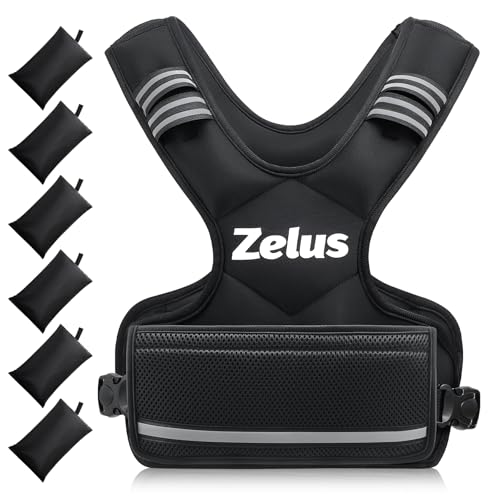
- Starts at a light 4-pound load
- Removable bags vary workout resistance
- Pocket and reflective strips aid outdoor use
Best For: Beginners and adjustable low-impact cardio
Reflective All-Rounder
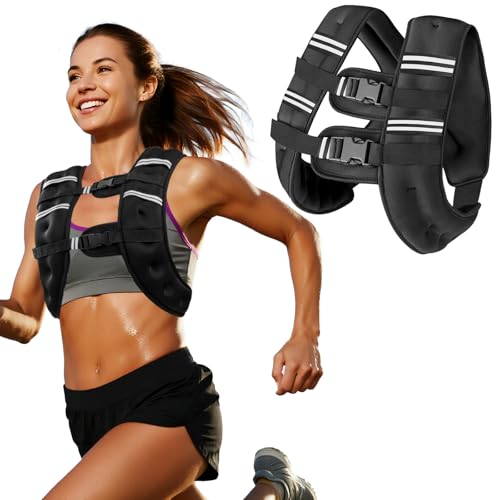
- 6–30 lb weight options
- Even distribution and adjustable straps
- Front and back reflective strips
Best For: Outdoor cardio and progressive resistance training
Comfort-Focused Progression

- Eight options from 6 to 30 lb
- Padded shoulders and adjustable buckle
- Sealed neoprene with reinforced seams
Best For: Beginners building cardio and muscular endurance
Storage-Friendly Training Vest
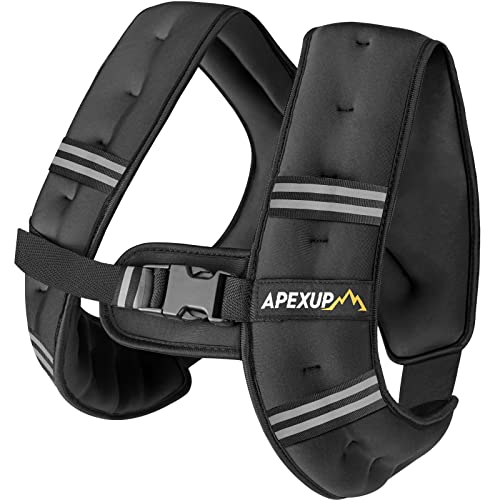
- Padded straps and waist belt
- Reflective straps for nighttime workouts
- Mesh pocket for keys or phone
Best For: Outdoor running, hiking, and fitness sessions
Best Adjustable Pick

- Adjustable with 20 individual 1-lb packets
- Padded shoulders and adjustable waist belt
- Reflective stripes for low-light visibility
Best For: Progressive cardio and full-body training
Best for Hands-Free Cardio
Liveet Adjustable Weighted Vest

- Weight options from 5 to 30 lb
- Phone, key, and rear mesh storage
- Front-and-back reflective strips
Best For: Outdoor cardio with hands-free storage
Best Lightweight Training Range
Poudee Adjustable Weighted Vest

- Weight options from 6 to 30 lb
- Even iron-sand distribution
- Adjustable, breathable design with reflective stripe
Best For: Versatile cardio and bodyweight workouts
Best Overall – TONE Fitness 12 lb Weighted Vest
The TONE Fitness vest is a practical weighted vest for cardio if you want a fixed 12-pound load for walking, running, or general conditioning. Its neoprene construction, reflective details, and storage pockets make it especially useful for outdoor workouts.
Best For: Walkers, runners, and fitness users who want a comfortable fixed-weight vest with convenient storage.
Pros:
- Soft neoprene evenly distributes the 12-pound load across the torso.
- Elastic sides and a buckle closure help create an adjustable fit.
- Reflective strips and storage pockets support outdoor, hands-free workouts.
Cons:
- The listed version provides a fixed 12-pound weight rather than removable resistance.
- The warranty is limited to 30 days.
Choose this model when comfort, visibility, and simple grab-and-go use matter more than fine-tuning the resistance.
Most Adjustable – Sportneer 2–18 lb Weighted Vest
The Sportneer is a versatile weighted vest for cardio because its removable packs let you adjust resistance from 2 to 18 pounds. Double-lock shoulder and waist straps, a zipper design, and evenly distributed front and back weights support a more customized fit.
Best For: Users who want to increase resistance gradually across cardio, walking, strength training, and weight-loss workouts.
Pros:
- Weight packs allow adjustment from 2 to 18 pounds.
- Four front and five back packs promote balanced weight distribution.
- Reflective strips, a zipper closure, and removable weights add practical versatility.
- Neoprene fabric is described as skin-friendly and sweat-absorbent.
Cons:
- The shoulder and waist straps require manual adjustment before use.
- Its multi-pack design may take more setup than a fixed-weight vest.
This is the strongest fit for progressive training, especially if you want to start light and add resistance as your conditioning improves.
Best for Outdoor Training – ZELUS 16 lb Reflective Vest
The ZELUS 16-pound vest is a solid weighted vest for cardio, running, and strength work when you want evenly distributed iron-sand resistance. Reflective strips and included storage help make it suitable for outdoor routines, while adjustable buckles accommodate chest sizes from 35 to 45 inches.
Best For: Outdoor exercisers who want a supportive, visibility-focused vest for cardio and strength training.
Pros:
- Evenly distributed iron-sand filling adds resistance without bulky equipment.
- Adjustable straps are designed for chest sizes from 35 to 45 inches.
- Reflective strips and a rear mesh pocket improve outdoor practicality.
- Available weight options range from 6 to 30 pounds.
Cons:
- The listed configuration weighs 16 pounds and is not described as removable.
- The one-size-fits-most design may not suit every body shape.
Pick this vest if outdoor visibility and a range of available weight choices are higher priorities than removable, in-workout adjustments.
Best Low-Impact Option – ZELUS Adjustable Removable-Weight Vest
The ZELUS adjustable vest is a flexible weighted vest for cardio, starting at 4 pounds and using removable iron-sand bags for variable resistance. Its neoprene construction, hook-and-loop fasteners, pocket, and reflective strips make it suited to activities ranging from walking and light jogging to cycling and kickboxing.
Best For: Beginners and users seeking low-impact, adjustable resistance for cardio and mixed fitness sessions.
Pros:
- Removable weight bags allow resistance to be adjusted for different workouts.
- Neoprene construction is designed for comfort during extended use.
- Reflective strips appear on the front, shoulders, and back.
- A wide pocket stores keys, a wallet, or a smartphone.
Cons:
- The supplied notes show varying capacity descriptions, so verify the chosen configuration before ordering.
- Hook-and-loop fastening may require more fitting adjustment than a simple buckle.
This model makes sense when you want to begin with lighter resistance and adapt the vest for walking, cardio, or strength sessions.
Reflective All-Rounder – Zikopomi Weighted Vest
If you want a weighted vest for cardio that can also support strength work, the Zikopomi model offers several weight options from 6 to 30 pounds. Its even-weight design, adjustable straps, and reflective strips make it suitable for controlled indoor or outdoor workouts.
Best For: Runners, walkers, and users who want progressive resistance with added low-light visibility.
Pros:
- Available in multiple weight options, from 6 to 30 pounds.
- Even weight distribution is designed to reduce shifting and help limit injury risk.
- Reflective strips on the front and back improve visibility in low-light conditions.
- Two adjustable elasticated straps accommodate different body and chest shapes.
Cons:
- The vest may have a slight new-product odor and may need to air out for one to two days.
- The supplied details identify a 12-pound size, so buyers should confirm the selected weight before ordering.
With durable neoprene, iron-sand filling, and reinforced double stitching, this is a practical choice for adding resistance to running, walking, cross-training, and strength sessions.
Comfort-Focused Progression – Zeerun Weighted Vest
The Zeerun is a weighted vest for cardio designed for gradual progression, with options from 6 to 30 pounds. Neoprene construction, thickened shoulder pads, an elastic band, and an adjustable buckle aim to keep the vest secure during running, walking, and training.
Best For: Beginners and fitness users who want to increase resistance over time while prioritizing a snug, cushioned fit.
Pros:
- Eight weight choices support gradual increases in workout intensity.
- Thickened shoulder pads help disperse pressure.
- Elastic band and adjustable buckle are designed to reduce shaking during movement.
- Double-stitched seams and sealed neoprene help support durability and prevent iron particles from leaking.
Cons:
- The available weight range may be more than needed for users seeking a very light, fixed-load vest.
- The supplied details list physical therapy among specific uses, but do not provide clinical guidance.
This model stands out for its progression-friendly weight range and ergonomic features, making it a reasonable option for building muscular endurance through walking, running, or general training.
Storage-Friendly Training Vest – APEXUP Weighted Vest
For a weighted vest for cardio with useful everyday features, the APEXUP combines breathable materials, padded shoulder straps, a waist belt, and a quick clip system. Reflective straps and a mesh pocket make it especially practical for outdoor running, hiking, and fitness sessions.
Best For: Runners and fitness users who want secure adjustability, nighttime visibility, and room for small essentials.
Pros:
- Padded shoulder straps and a waist belt help distribute the load and secure the fit.
- Simple clip system allows quick fit adjustments.
- Reflective straps support visibility during nighttime workouts.
- Mesh pocket holds small items such as keys or a phone.
Cons:
- The supplied details specify a 10-pound size, so it offers less stated weight flexibility than the other listed models.
- The product is described as suitable for adults, so buyers should verify fit before use by children.
Its combination of fit-focused padding, reflective details, and storage makes the APEXUP a convenient choice when you want to add resistance without carrying a separate small-item pouch.
Best Adjustable Pick – CAP 20-lb Weighted Vest
If you want a weighted vest for cardio that can support progressive training, the CAP Adjustable Weighted Vest offers 20 lb of resistance with individual 1-lb iron ore packets. Its adjustable belt, padded shoulders, and reflective stripes make it suited to running, walking, and broader conditioning workouts.
Best For: Progressive cardio and full-body training for adults who want adjustable 20-lb resistance.
Pros:
- Adjustable resistance using 20 individual 1-lb packets.
- Designed for running, walking, push-ups, squats, lunges, and conditioning.
- Adjustable waist belt and padded shoulders help create a stable fit.
- Reflective stripes improve visibility in low-light conditions.
Cons:
- The listed configuration is a 20-lb vest, which may be demanding for beginners.
- Its heavier resistance may be less suitable for light, casual cardio sessions.
This is a practical choice when you want to increase workout intensity gradually rather than commit to a fixed load. The removable 1-lb packets also make it easier to tailor resistance to different exercises.
Best for Hands-Free Cardio – Liveet Adjustable Weighted Vest
For a weighted vest for cardio with useful everyday features, this Liveet model combines adjustable resistance options with a phone-and-key pouch and rear mesh storage. Its buckle strap fits stated chest sizes from 31 to 45 inches, while reflective strips support visibility during outdoor training.
Best For: Walking, running, HIIT, and cardio sessions where hands-free storage and visibility are priorities.
Pros:
- Available in weight options from 5 to 30 lb, including the listed 10-lb size.
- Adjustable buckle strap is designed for 31- to 45-inch chests.
- Includes an arm pouch and rear mesh pocket for small essentials.
- Reflective strips appear on the front and back for 360-degree visibility.
Cons:
- The supplied details list multiple weight options, so the selected load should be confirmed before purchase.
- Storage pockets may add bulk for users who prefer a minimal vest.
This vest stands out for outdoor cardio because it combines resistance training with practical storage and reflective detailing. Its stated fit range also makes it a versatile unisex option for many users.
Best Lightweight Training Range – Poudee Adjustable Weighted Vest
The Poudee Weighted Vest is a flexible option for anyone comparing a weighted vest for cardio across several activities. It is offered in loads from 6 to 30 lb, uses adjustable straps and breathable materials, and distributes iron sand evenly for running, jogging, walking, hiking, and bodyweight training.
Best For: Users who want multiple load choices for cardio, walking, running, and strength-focused bodyweight workouts.
Pros:
- Available in weight options from 6 to 30 lb, including the listed 12-lb size.
- Evenly distributed iron sand is intended to help minimize exercise-related strain.
- Adjustable straps and breathable materials support mobility and comfort.
- Reflective stripe adds visibility for outdoor sessions.
Cons:
- The supplied details identify strength training as the specific use, despite its broader activity list.
- It closes with hook-and-loop fastening rather than a buckle system.
Choose this model if you value a broad range of resistance options and want one vest for both cardio-oriented movement and bodyweight exercises. Its even-fill design is a useful consideration when comfort during longer sessions matters.
How We Picked the Best Weighted Vest for Cardio
We focused on the features that affect real-world training: adjustable weight, fit, stability, comfort, visibility, and versatility. The products in this roundup span lightweight 5- to 12-pound designs for beginners and cardio sessions, as well as heavier models for progressive resistance and strength training.
We also considered whether a vest can be adjusted as fitness improves, whether its weight is likely to stay balanced during movement, and whether reflective details add useful visibility for outdoor workouts. Because comfort is highly personal, pay close attention to sizing, chest coverage, closure style, and weight placement before buying.
Quick Comparison
| Best for | What to look for |
|---|---|
| Walking and beginner cardio | Lightweight, comfortable fit with modest fixed or removable weight |
| Running and interval training | Secure closure, minimal bounce, compact profile, and reflective accents |
| Progressive resistance | Removable weights or a broad adjustable range |
| Strength-focused training | Higher maximum load, durable construction, and stable weight distribution |
| Outdoor workouts | Reflective strips, close fit, and unrestricted arm movement |
Key Buying Factors for a Weighted Vest for Cardio
Weight and Adjustability
Start with a load you can control while maintaining normal posture and an efficient stride. Adjustable vests are useful when you want to progress gradually or use one vest for walking, running, and strength sessions. A fixed lighter vest may be simpler and more comfortable for steady cardio.
Fit and Stability
A vest should sit close to your torso without restricting breathing or arm movement. Adjustable straps help reduce shifting, but an overly loose vest can bounce during running. Check the size range and measure according to the manufacturer’s instructions.
Weight Distribution
Evenly distributed front and back loading usually feels more balanced than concentrated weight. For cardio, avoid choosing a maximum load that encourages leaning forward, shortened steps, or poor form.
Visibility and Durability
Reflective detailing is helpful for early-morning or evening outdoor sessions, although it does not replace lights or high-visibility clothing. Look for durable fabric, reinforced seams, and closures that are easy to adjust while wearing the vest.
Who Should Buy Which Weighted Vest for Cardio?
Beginners and walkers: Choose a comfortable vest in the lower weight range, ideally with removable weights so you can build tolerance gradually.
Runners and interval trainees: Prioritize a close, stable fit and a compact design over the highest advertised capacity. Reflective accents are a practical bonus for outdoor use.
Strength-training users: Look for a vest with a larger adjustable range and securely held removable weights. Higher-capacity models are best reserved for users who already have solid conditioning and lifting technique.
Households sharing equipment: An adjustable model offers more flexibility across different users, but confirm that its torso fit and adjustment points suit everyone who will wear it.